For webshops
A blog that sells your products,
published straight into Shopify
You already know which products make you money. The problem is that the person searching for exactly what you sell has never heard of your shop.
One full article free. No card required, no time limit.

What actually works
Your buyer is asking a question. Your product is the answer.
Content for a webshop is not the same job as content for a consultancy. A consultancy writes to be trusted, and the sale happens months later in a conversation. A shop writes to be found at the exact moment somebody is deciding what to buy, and the sale happens on the page.
That changes what is worth writing. Somebody searching for the best option for a specific person, a specific budget, or a specific problem has their card out and has not chosen a shop yet. An article that answers that question honestly, and happens to stock the answer, is doing sales work. An article about your brand values is not.
Reaches a buyer
- The best option for a particular person or occasion
- What to buy for a specific problem, and why
- How to choose between two things that look the same
- What people get wrong before they buy
Reaches nobody
- Our brand story and what we believe in
- Five trends shaping our industry this year
- A recap of the trade show we attended
- Anything written because the calendar said Tuesday
Working out which questions your buyers actually ask is the first step, and it is keyword research, not guesswork. cpywrk does that before anything gets written, so the article exists because somebody is looking for it.
By category
The question is different on every shelf
A skincare buyer searches the ingredient. A parent searches the age. Somebody replacing a brake pad searches the model year. The article that reaches each of them is shaped differently, so each category has its own page: what its buyers actually search, the one article format that does the work, and where the honest limits are.
-
 Beauty Buyers search the ingredient before the brand
 -
 Apparel Buyers search the occasion and the fit
 -
 Home & garden Buyers start with the room, then the spec
 -
 Wellness & supplements Buyers ask what it does and how much to take
 -
 Fitness & outdoor Buyers weigh two options against a constraint
 -
 Pets Buyers ask what they would ask a vet
 -
 Food & drink Buyers search how to make it before what to buy
 -
 Toys & kids Buyers search by age and milestone
 -
 Jewellery Buyers search the occasion, the metal and the size
 -
 Electronics Buyers compare specs and check what fits what
 -
 Arts & crafts Buyers start with the project
 -
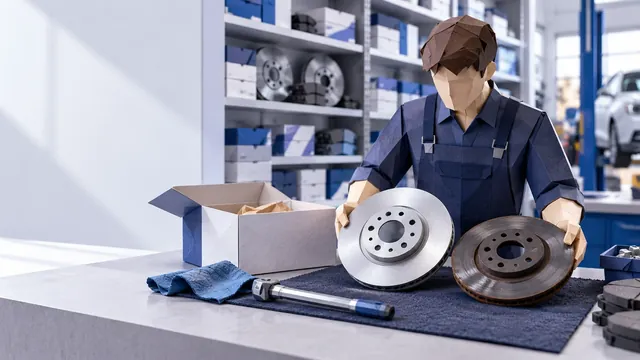 Auto parts Buyers ask whether it fits and how to swap it
Where it ends up
An article in a document has never sold anything
This is where most tools stop. You get a draft, and then somebody has to format it, find the images, paste it into the store, set the meta description and link the products. That somebody is you, on a Sunday, and it is why the blog has three posts from last March.

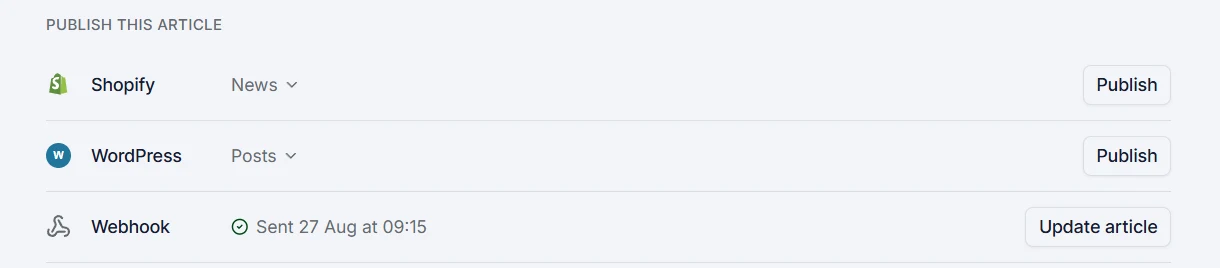
Shopify, direct
Connect the store once. After that it is one button: press Publish and the article is live on your store, formatted. It arrives with its images and its product links in place.

WordPress, direct
Same again if your shop runs on WooCommerce, or its blog runs on WordPress. Connected once, then the same single button sends it.

Webflow, direct
Running the shop or its blog on Webflow? Connect the site once and pick the collection the articles land in. After that, the same single button sends it.
Anything else, by webhook
On any other platform, the webhook hands the finished article to whatever you do run.
Articles come out in English, Dutch, Czech or German, so a shop selling in Dutch publishes in Dutch.
The LinkedIn, X and Instagram versions come out of the same brief, written for how each one reads. Those are yours to post when you choose. We write them; we do not post them for you.
Before it publishes
Six checks, and they matter more when the article is doing sales work
A post that sounds like a machine wrote it costs a consultancy some credibility. It costs a shop the sale, because the reader is already deciding whether to trust you with a card number. Every article is graded on six dimensions before anyone sees it.
Search
It targets a question people actually type, and it is built to rank for it.
AI answers
Shoppers now ask assistants what to buy. The article is structured so those systems can quote it.
Brand voice
It sounds like your shop, checked against rules you set once rather than re-explained every time.
Machine tells
Hedging, filler and the giveaway phrasing are removed before the draft reaches you.
Brief compliance
It covers what the brief said it would, rather than drifting somewhere easier to write.
Learnings
Corrections you made last month are applied this month, so you stop repeating yourself.
On the self-serve plans you approve the outline before writing starts and read the draft before it publishes. Nothing goes into your store that you have not seen. See every step up close.
Every plan runs the same system; what changes is how much you publish. See what it costs.
Proof
Read something it made and judge for yourself
We are not going to show you a competitor's shop and tell you what it earned. What we can show you is our own work. Every article on this blog came out of the same system this page is describing: researched, written, checked, and published, then read and approved by a person before it went out.
They are written for marketers rather than for shoppers, because that is who buys this. The question they answer for you is a different one: does the writing hold up?
Read the blogQuestions worth asking first
- What kind of blog content actually sells products for a webshop?
- Content that answers a question someone asks before they buy, where your product is a legitimate answer. Somebody searching for the best option for a specific person, budget, or use case is already deciding where the money goes, and nothing in what they typed names a shop yet. Brand storytelling and industry commentary rarely reach that shopper, because it is not what they were looking for.
- Can cpywrk publish straight into my Shopify store?
- Yes. Connect the store once, and after that publishing is one button: press Publish in cpywrk and the finished article is live on your store, formatted. WordPress and Webflow work the same way. Any other platform receives the article through a webhook.
- Do I have to approve every article before it goes live?
- On the self-serve plans, yes, and that is the point of them: you approve the outline before writing starts and review the draft before it publishes. On the Managed plan cpywrk approves on your behalf against a brand brief you sign at the start.
- How is this different from asking a chatbot for blog posts?
- A chatbot hands you a draft and stops. The work that follows, deciding what to write about, checking it against how your shop actually sounds, and getting it onto the store, is the part that does not happen. cpywrk does the research first and the publishing last, with six quality checks in between.
- Will the articles read like a sales pitch?
- Only as far as you want them to. You set how many of your products an article may name, from none up to seven, once for the shop and again for any single article that needs a different number. A buying guide can name three and still read as advice. A care guide can name none and still bring the reader to your store. How it sounds is set by your brand voice, never by the count.
Run one article on your shop and see
Approve one brief, watch it move through all four steps, and judge the draft against anything else you have tried. If a draft misses, you send it back. Revisions are unlimited and cost nothing from your plan.
Start free trialOne full article free. No card required, no time limit.
Would rather not run it yourself? We can run it for you.