Nobody searches for the dress.
They search the wedding.
Apparel shoppers type the occasion, the body shape and the size question long before they type a brand. You already answer those questions one customer at a time in the returns inbox, and search is where they get asked first.
Written for shops where the person packing the orders is also the person who would write the blog.
One full article free. No card required, no time limit.

What actually works
The search names the event or the body, not the garment
An apparel shopper rarely starts at the product. They start at the occasion, or at themselves: "what to wear to a wedding", "best jeans for pear body shape", "how to style wide-leg pants", "oversized blazer size guide", "linen vs cotton for summer". The garment comes last, once they have worked out what they are looking for. Apparel is the most crowded shelf online, so the competition for those searches is real.
Underneath all of it sits the same question: will it fit me. It is the question a product photograph on a model of one size never settles, and the one that decides whether the parcel comes back. A size chart does not answer that. You can, because you know this cut runs small, this fabric has no give, and this length sits differently on a shorter frame.
Reaches a buyer
- What to wear to one specific event, from the shoes up
- Which cut actually suits which body shape
- What size to take when a style runs small
- How two fabrics behave after ten washes
Reaches nobody
- The new season has landed, and here it is
- Notes from a fashion week you did not attend
- A lookbook with no words and no search behind it
- Anything that would read the same with another shop's name on it
Trends are worth naming here, because they are the trap. A piece on whether a silhouette is back takes its traffic in one season and then stops. It earns a slot in the plan, not the plan.
The article that does the work
Answer the size question before the returns form does
The format that carries an apparel blog is the fit and size guide: one cut, what it measures, who it suits, where it runs small, and what to do when you are between sizes. Shoppers read it to the end, because they are trying to avoid an outcome rather than browse. It runs in four parts, in this order, and each one is a different search:
-
The measurement
Chest, length, rise, inseam, taken flat and given in centimetres. Short, near the top, and stated as numbers rather than as adjectives.
-
The body
"best jeans for pear body shape". The reader is describing themselves, so each shape gets its own heading and the answer sits under the one that matches.
-
The between-sizes call
"oversized blazer size guide". Size up or stay put, and why. This is the line a shopper screenshots, and the one an assistant quotes back when it is asked.
-
The fabric
"linen vs cotton for summer". How the cloth behaves once it has been worn, washed and sat in. Two garments with the same measurements do not fit the same.
Two things about apparel are worth saying out loud. It is one of the most competitive verticals in retail search, search brings fewer people to a clothing shop than it does to most others, and plenty of fashion discovery now starts with a camera and never becomes a text query at all. Activewear brands may find the fitness and outdoor page closer to how their buyers search. The pitch here is not a quick win. It is fit, size and occasion content published steadily, on the questions your competitors answer with a size chart and nothing else. And cpywrk does not know how your garments fit. It does not know which style runs small or which fabric has no give until somebody says so. You do, out of every return you have processed. That belongs in the brief, and the brief is what you approve before a word is written.
Where it ends up
An article in a document has never sold anything
The wedding is in three weeks and the outfit has narrowed to a shortlist of two. That shortlist gets filled wherever the question was answered, and only if the garments are on the same page as the answer. cpywrk writes the article and puts it live on your shop, with the pieces named in it.

Shopify, direct
Connect the store once. After that it is one button: press Publish and the article is live on your store, formatted.

WordPress, direct
Same again if your shop runs on WooCommerce, or its blog runs on WordPress. Connected once, then the same single button sends it.

Webflow, direct
Running the shop or its blog on Webflow? Connect the site once and pick the collection the articles land in. After that, the same single button sends it.
Anything else, by webhook
On any other platform, the webhook hands the finished article to whatever you do run.
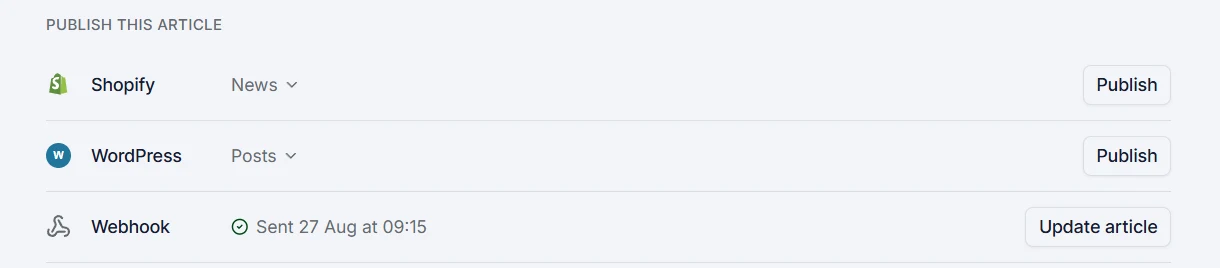
The article arrives with its product links in place and the images where they belong, so the shopper who just read why is one click from the thing itself.
Articles come out in English, Dutch or Czech, so a shop selling in Dutch publishes in Dutch.
The LinkedIn, X and Instagram versions come out of the same brief, written for how each one reads. Those are yours to post when you choose. We write them; we do not post them for you.
Before it publishes
Six checks, and they matter more when the article is doing sales work
An article that gets a size or a fabric wrong does not cost an apparel shop one sale. It costs the sale, the return that follows it, and a shopper who has decided your sizing cannot be trusted. Sizing is the subject this shelf cannot afford to be vague about, and vagueness is one of the things the checks below take out.
Search
It targets a question people actually type, and it is built to rank for it.
AI answers
Shoppers now ask assistants what to buy. The article is structured so those systems can quote it.
Brand voice
It sounds like your shop, checked against rules you set once rather than re-explained every time.
Machine tells
Hedging, filler and the giveaway phrasing are removed before the draft reaches you.
Brief compliance
It covers what the brief said it would, rather than drifting somewhere easier to write.
Learnings
Corrections you made last month are applied this month, so you stop repeating yourself.
On the self-serve plans you approve the outline before writing starts and read the draft before it publishes. Nothing goes into your store that you have not seen. See every step up close.
It does not invent a number about your products: figures come from the brief you approve or from a source the article names.
Proof
Read something it made and judge for yourself
We are not going to show you another shop and tell you what it earned. What we can show you is our own work. Every article on this blog came out of the same system this page is describing: researched, written, checked, and published, then read and approved by a person before it went out.
The subject is marketing rather than skincare or brake discs, because that is what we sell. Read one anyway and answer the only question a sample can settle: is this the standard you would put your shop's name on?
Read the blogQuestions worth asking first
- Can it write a size guide for a garment it has never handled?
- It writes from the brief you approve. You give it the measurements, the fit notes and who the cut suits; cpywrk researches how shoppers ask about that kind of garment and writes to it. It does not invent a measurement. A measurement you have not given is asked for at the outline, not guessed at in the draft.
- Our range changes every season. Does the blog have to change with it?
- Most of it does not. How to dress for a wedding, which cut suits which shape, and how linen behaves in July are all still true next year, and they keep earning searches long after the collection has sold through. Trend pieces are the short-lived ones. A collection launch has almost no search behind it at all.
- Most of our traffic comes from paid social. Is a blog worth it for us?
- Apparel is one of the verticals where organic search brings in a smaller share of traffic than paid and social do, and we are not going to pretend otherwise. What search reaches is the shopper who has not chosen a shop yet and is asking something you can answer better than a magazine can. Each article also produces LinkedIn, X and Instagram posts from the same brief. cpywrk writes those; posting them stays with you.
Selling something else
- Beauty
- Home & garden
- Wellness & supplements
- Fitness & outdoor
- Pets
- Food & drink
- Toys & kids
- Jewellery
- Electronics
- Arts & crafts
- Auto parts
Or start from what content has to do for any webshop.
Run one article on your shop and see
You bring the topic, approve one outline and read one draft. The research, the writing, the checks and the publishing happen without you, and if the draft misses, you send it back: revisions are unlimited and cost nothing from your plan.
Start free trialOne full article free. No card required, no time limit.
Would rather not run it yourself? We can run it for you.