The gift search is crowded.
The metal question is yours.
Jewellery, watches and accessories sell on details a photograph cannot carry: what the metal is, whether it will fit, how to keep it. You already know those details, and you can publish them straight into your store.
Written for shops where the person packing the orders is also the person who would write the blog.
One full article free. No card required, no time limit.

What actually works
The first search is a gift. The second is a spec.
The first thing a jewellery buyer types is about somebody else: anniversary gift by year, birthstone for June, something for a sister who already owns a drawer of silver. That search is broad, crowded, and full of people who have not decided to buy anything yet. The searches that come after are narrower and worth far more to you: gold vermeil vs gold plated, how to measure ring size at home, how to clean sterling silver. By then there is a piece in mind and one doubt in the way.
The second group is where a small shop answers better than anyone. A gift round-up can be assembled by someone who has never handled the stock. What the plating actually measures, whether the clasp is soldered, how your chains behave after a summer in salt water: that comes from the bench. An article that settles one of those doubts and ends at the piece you sell is doing sales work. A styling post about the new collection is not.
Reaches a buyer
- What one metal actually is, and how long it holds up
- How to measure a ring size or a wrist at home
- How to clean and store one material so it lasts
- What a hallmark actually certifies, and what it does not
Reaches nobody
- A gift guide that reads like nine other gift guides
- The story behind this season's collection
- A studio tour with no question in it
- Valentine's Day content published in February
Sometimes the honest answer is that the gift guide is not worth this month's slot and the sizing guide is. cpywrk finds that out before you have written either, which matters when neither was going to get written between the bench and the post office run.
The article that earns its place
The three questions asked before a stranger buys
The format that carries this shelf is the explainer: one question, answered by somebody who handles the stock, ending at the piece that fits. The reader is usually a stranger deciding whether a shop they have never bought from can be trusted with a present or a proposal. Material, size, care. Then the fourth thing, which cannot be researched at all.
- Material
- "gold vermeil vs gold plated". Two words apart in a listing, years apart on the skin. The search check keeps the article on the comparison people type rather than the one that sounds better.
- Size
- "how to measure ring size at home". A guess becomes a return. The steps are written so an assistant can read them back to a shopper, which is what the AI answers check grades.
- Care
- "how to clean sterling silver". Asked by somebody who already owns a piece, which makes it the article that brings a buyer back rather than one that finds a new one.
- Provenance
- The hallmark, the karat, the stone. No amount of research produces these. They come out of your brief, and they are why the article could not have been written about any other shop.
Be clear about the job. Your photographs and your product pages sell the piece, and they should. What an article does is settle the doubt that stops a stranger ordering: what the metal is, whether it will fit, how to keep it. That is a narrower job than a blog does on most shelves, and it is worth a slot a month rather than a campaign. Size it to that.
One more limit, and it decides whether any of this works. Put the facts of the piece into the brief once and standing rules keep them applied to everything after, and the outline gate catches a wrong size chart before anyone has written a paragraph around it. What cpywrk does not know is your hallmark, how thick the plating is, or whether that chain is soldered or open. Those come off your bench and into the brief.
Where it ends up
An article in a document has never sold anything
A reader who has just learned that vermeil is not plating now trusts one shop more than they did five minutes ago. That trust is worth nothing on a blog that is not the shop. cpywrk publishes into the store itself, so the piece is a scroll away from the sentence that settled it.

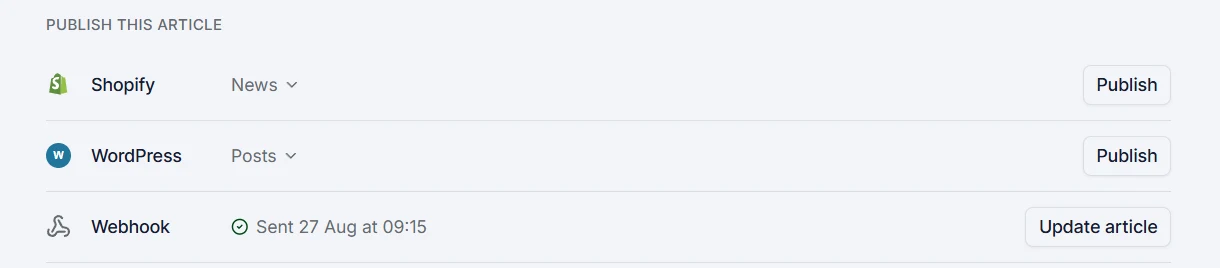
Shopify, direct
Connect the store once. After that it is one button: press Publish and the article is live on your store, formatted.

WordPress, direct
Same again if your shop runs on WooCommerce, or its blog runs on WordPress. Connected once, then the same single button sends it.

Webflow, direct
Running the shop or its blog on Webflow? Connect the site once and pick the collection the articles land in. After that, the same single button sends it.
Anything else, by webhook
On any other platform, the webhook hands the finished article to whatever you do run.
The article arrives with its product links in place and the images where they belong, so the shopper who just read why is one click from the thing itself.
Articles come out in English, Dutch or Czech, so a shop selling in Dutch publishes in Dutch.
The LinkedIn, X and Instagram versions come out of the same brief, written for how each one reads. Those are yours to post when you choose. We write them; we do not post them for you.
Before it publishes
Six checks, and they matter more when the article is doing sales work
A wrong sizing chart or a wrong metal fact does not cost you a click here. It costs you a return, and often a gift that failed in front of someone. A present raises the price of being wrong, and every draft clears the checks below because of it.
Search
It targets a question people actually type, and it is built to rank for it.
AI answers
Shoppers now ask assistants what to buy. The article is structured so those systems can quote it.
Brand voice
It sounds like your shop, checked against rules you set once rather than re-explained every time.
Machine tells
Hedging, filler and the giveaway phrasing are removed before the draft reaches you.
Brief compliance
It covers what the brief said it would, rather than drifting somewhere easier to write.
Learnings
Corrections you made last month are applied this month, so you stop repeating yourself.
On the self-serve plans you approve the outline before writing starts and read the draft before it publishes. Nothing goes into your store that you have not seen. See every step up close.
It does not invent a number about your products: figures come from the brief you approve or from a source the article names.
Proof
Read something it made and judge for yourself
We are not going to show you another shop and tell you what it earned. What we can show you is our own work. Every article on this blog came out of the same system this page is describing: researched, written, checked, and published, then read and approved by a person before it went out.
The subject is marketing rather than skincare or brake discs, because that is what we sell. Read one anyway and answer the only question a sample can settle: is this the standard you would put your shop's name on?
Read the blogQuestions worth asking first
- Will it get the metal terminology right?
- It writes to the brief you approve, and metal terms are exactly what standing rules are for: vermeil is not plated, karat is the gold and carat is the stone, and whatever your shop calls each finish. cpywrk researches how buyers phrase the question, then writes it your way. Same for watches and leather goods: movement, water resistance rating, strap width. Where an article needs a figure only you hold, the outline asks for it before writing starts.
- Is a blog even worth it for a jewellery shop?
- Worth less here than on most shelves, and worth being straight about that. Jewellery is bought on the photograph and the product page, and search brings a smaller share of visitors here than to almost any other kind of shop. What still pays is narrow: material, sizing and care articles that settle a doubt while somebody is deciding whether to trust your shop.
- Most of our year happens in the six weeks before Christmas. When should articles go out?
- Before the season, not during it. A page published in December has had no time to be found, and it is competing with pages that have been answering the same question since the summer. Put the occasion pieces on the schedule months ahead, and keep the material, sizing and care articles running all year, because those questions get asked in February as readily as in November.
Selling something else
- Beauty
- Apparel
- Home & garden
- Wellness & supplements
- Fitness & outdoor
- Pets
- Food & drink
- Toys & kids
- Electronics
- Arts & crafts
- Auto parts
Or start from what content has to do for any webshop.
Run one article on your shop and see
You bring the topic, approve one outline and read one draft. The research, the writing, the checks and the publishing happen without you, and if the draft misses, you send it back: revisions are unlimited and cost nothing from your plan.
Start free trialOne full article free. No card required, no time limit.
Would rather not run it yourself? We can run it for you.