How it works
Every step, in depth
Every step is built to remove decisions. Each step sets up the next, and your brand stays consistent throughout.
Always active
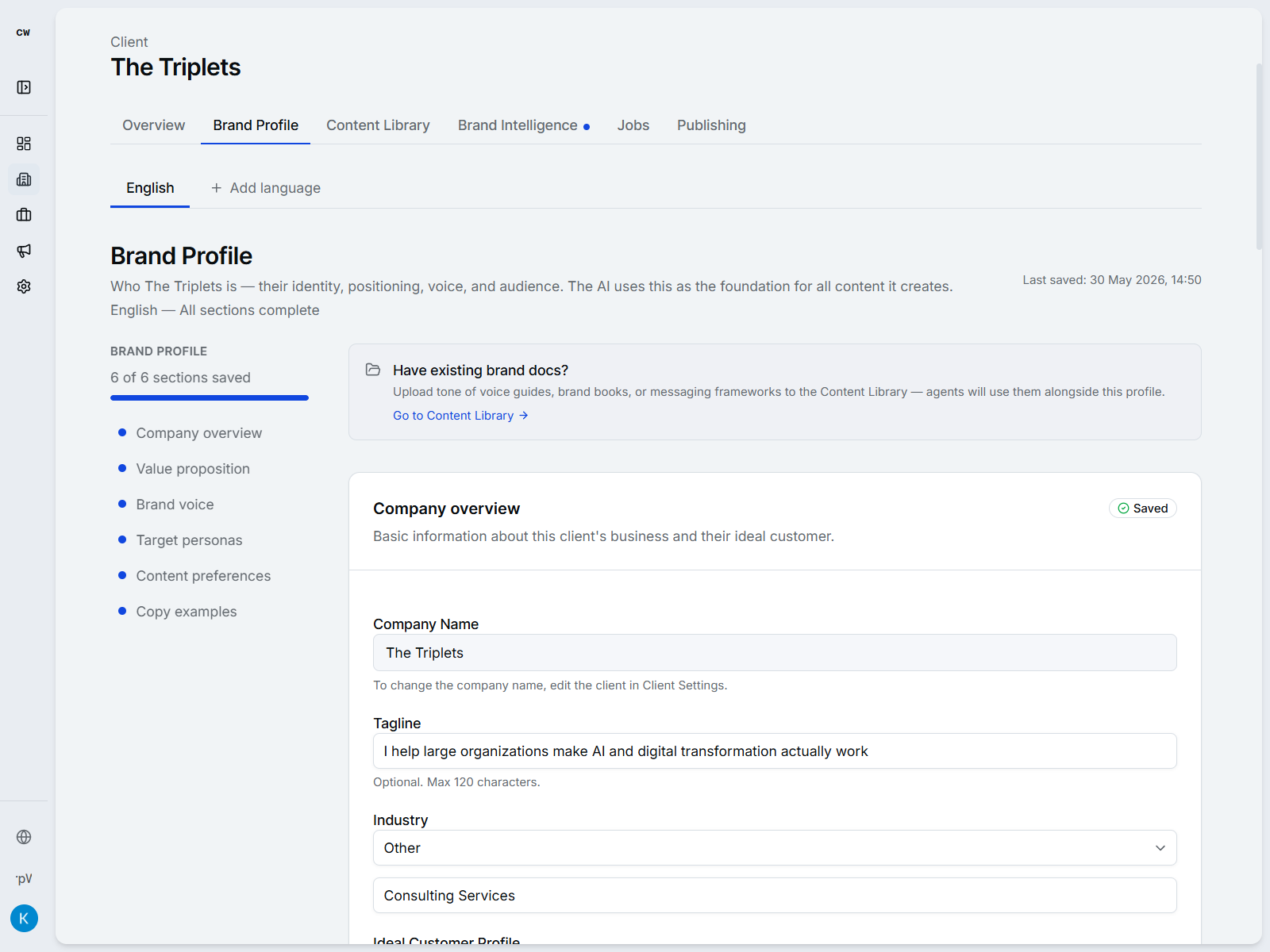
Your brand, in every word
Voice, tone, guidelines, and past work. cpywrk draws on all of it automatically, so you never have to brief an AI from scratch again.
It is also the part that readers notice: why audience trust in AI content is a competitive advantage.
-
Set your voice once
Tone, style, and writing rules applied to every job automatically. No re-briefing, no drift.
-
Attach past work as examples
Real articles you've written become live brand references, not a style guide collecting dust.
-
Always on, never repeated
Brand context runs in the background across every step, invisible until you need it.
Step 01
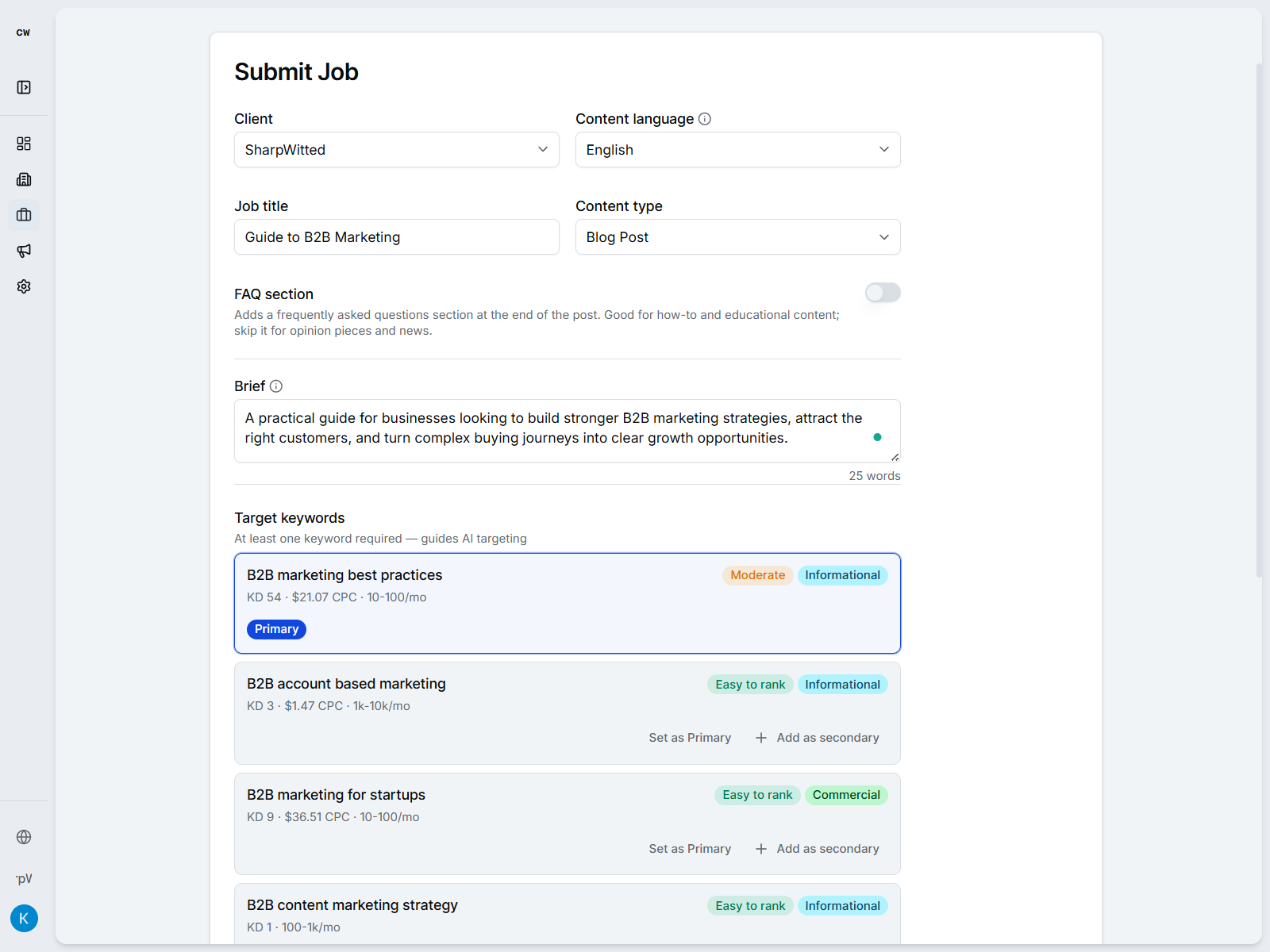
Clear intent before a word is written
Drop in a topic, a keyword, or a rough idea. cpywrk shapes it into a structured brief: audience, angle, and format locked in before any writing starts.
Where that brief is aimed matters as much as what it says: GEO vs SEO for B2B marketers covers which to prioritise first.
-
Start with anything
A topic, a keyword, a half-formed idea. cpywrk turns it into a brief the later steps can work from.
-
Audience and angle locked in early
Format, reader, and angle are set before writing starts, not discovered halfway through a draft.
-
Structured output, not a blank doc
Every downstream step gets a brief it can actually build on.
Step 02
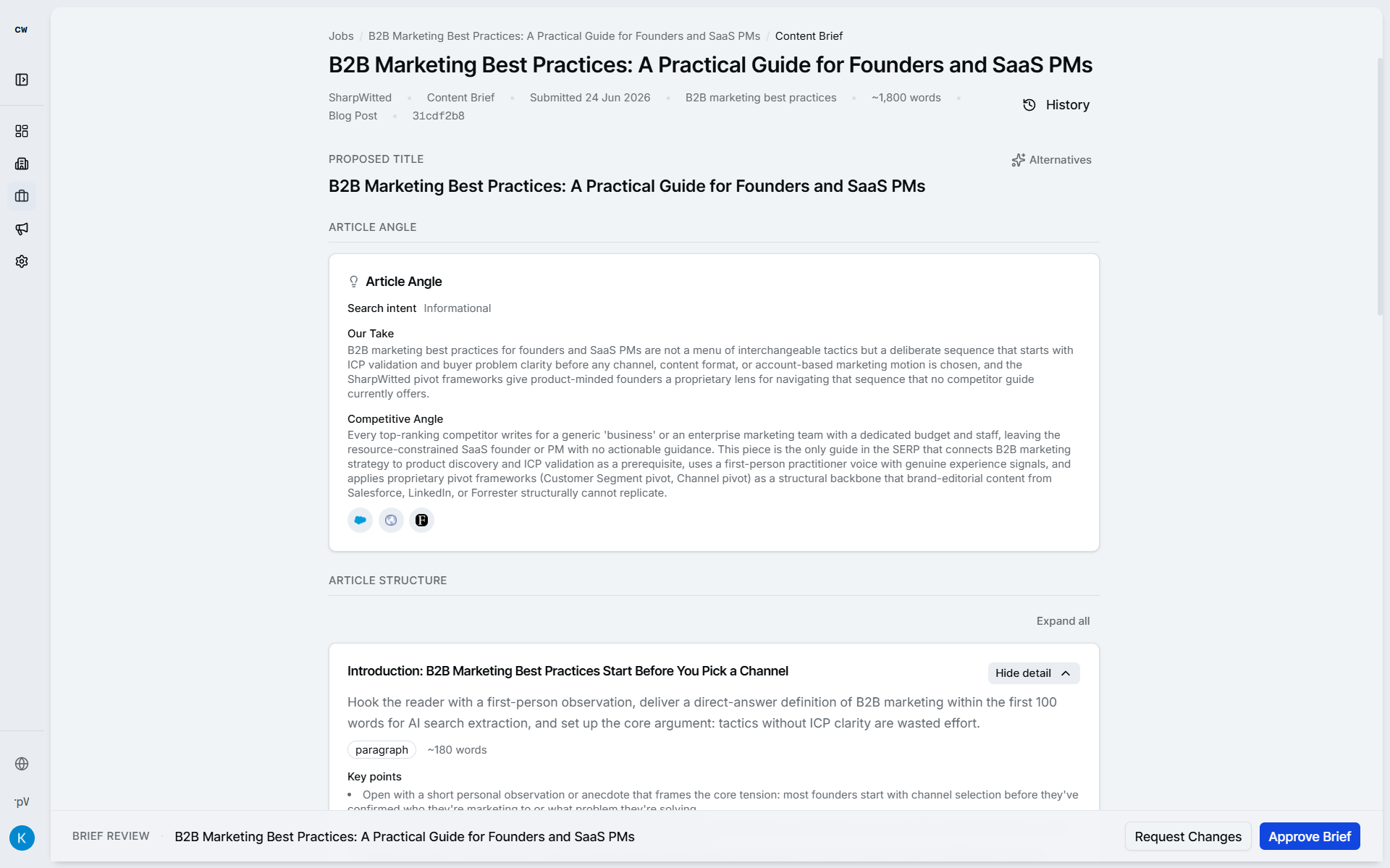
Structure that serves the story
A content-ready outline with H2s and narrative flow, shaped by your brief, filtered through your brand. Change what you want before anything goes further.
-
Brief-driven, not generic
H2s and narrative flow built from your specific angle, not a recycled template.
-
Edit before you commit
Review and reshape the structure before a word of body copy is written.
-
Brand voice from heading one
Your tone filters in at the outline stage, not as a post-draft polish pass.
Step 03
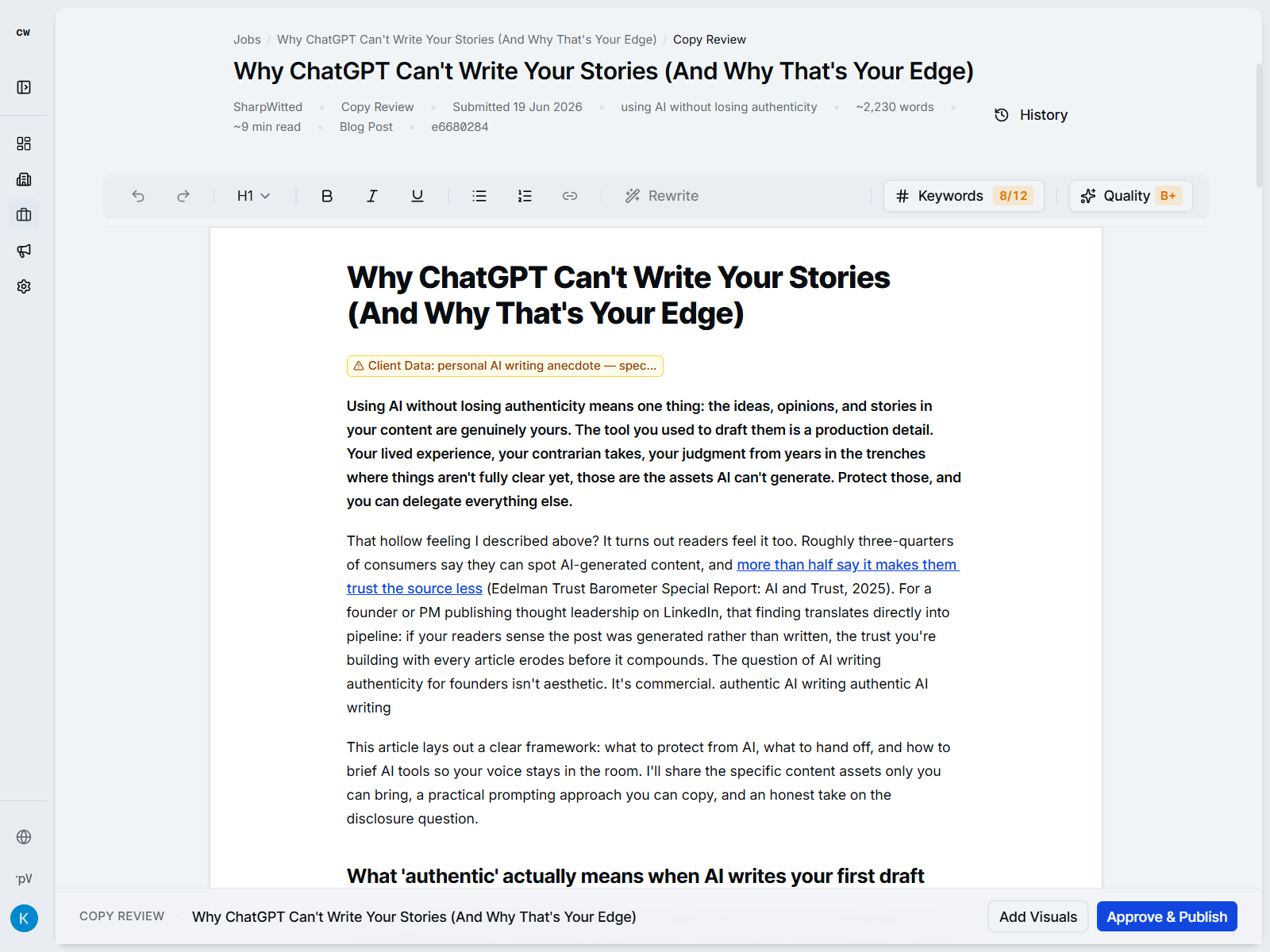
From outline to first draft, without the blank page
A full draft in your voice. Route it through your editor, hand off to AI agents for a pass, or both. You decide what ships.
Keeping a writer in control of that step is the whole argument in AI copywriting trends for 2026.
-
Full draft, your voice
A complete article, section by section, written in the style you trained into the platform.
-
Linked to your own pages
Every article links to your own pages, chosen from your site, so new content strengthens what you already publish.
-
Human or AI review, or both
Route to your editor, run AI agents over it, or combine both passes before approving.
-
Nothing ships without your sign-off
You stay in the loop at every approval gate. Speed without surrendering control.
Step 04
Approved, then actually published
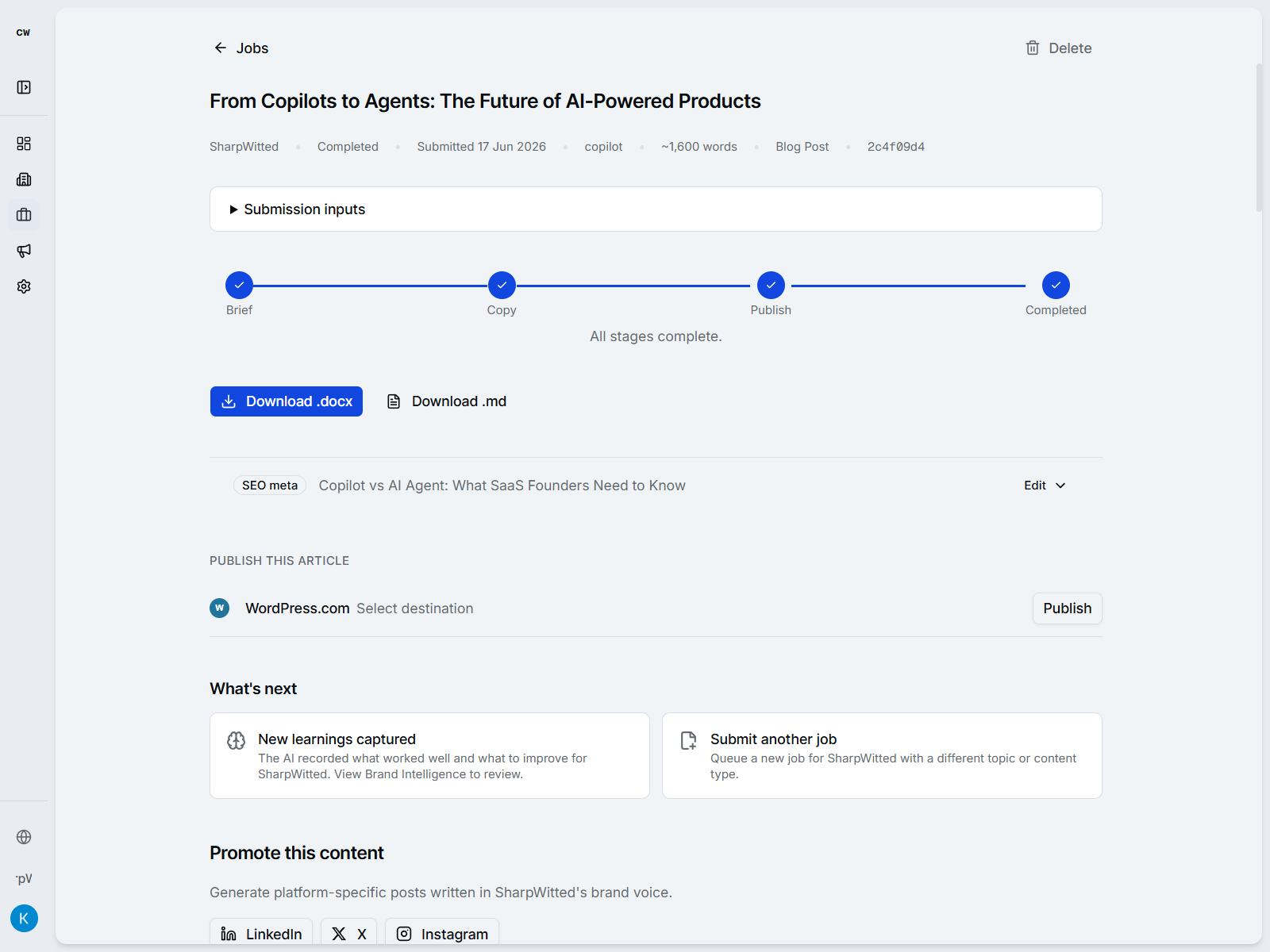
Connect WordPress, Shopify or Webflow once. When the article is ready, you press Publish and it goes live on your site, formatted, with no copy-paste in between. Anything else goes out through a webhook. Or set a schedule and let it go out on its own. The LinkedIn, X and Instagram versions are written from the same brief, in your brand voice, ready for you to post.
-
Direct to WordPress, Shopify and Webflow
Connect the site once. After that it is one button: press Publish and the finished article is live, formatted.
-
Anything else, through a webhook
If your site is on neither of those, the webhook hands the finished article to whatever you do run.
-
Sources, checked before it goes live
Every link is checked before the article goes live. Unreachable links, links that now land on a homepage instead of the page cited, and ageing sources are flagged with the passage. A clean article publishes with no extra step.
-
Or scheduled, on a plan you set
A date and time in your own time zone per article, or a batch at one or two a day. Any scheduled article can be rescheduled or cancelled.
-
Social posts written, not posted
LinkedIn, X and Instagram versions come out of the same brief, in your brand voice. You choose when they go out.
After publishing
Know whether the blog is working
You do not have to take our word for it, or wait for a report to arrive. Every article shows how many people found it, how many chose it, how long they stayed, and how many carried on into the rest of your site.
-
What people actually search for
You see which articles get found and which get chosen, so next month’s topics come from evidence rather than a hunch.
-
Whether it held them
How long a reader stayed tells you what a click cannot: that the piece landed.
-
Whether it sent them further
You see who carried on from the article into the rest of your site, which is where a reader turns into a customer.
-
Whether two pages are competing
Two of your own pages chasing the same search split the result. You see the pair and which page should own it, so you settle it once.
It is the Performance tab in your account. The figures are Google’s own, read from your own Search Console and Analytics.
On every plan
Three things you can count on
-
Links you can stand behind
Every link in your article points to one of your own pages or to a source checked live before it published. We do not buy, trade or place links anywhere, so there is nothing in your blog you would have to explain later.
-
It learns your business, and only yours
One account is one business, so your voice, your customers and every correction you make go into your next article and nobody else's. The tenth article knows things the first one did not.
-
You keep the last word
Nothing publishes until a person says yes. On Starter and Growth that person is you; on Managed it is us, and you can take that gate back whenever you want.
Done for you, approved by you
cpywrk does the work. You give the go-ahead.
The next article is researched, planned, written and made ready to publish while you run your business. It lands in your inbox as a draft; you read it and give the go-ahead, and nothing publishes without that.
Getting started takes three steps: confirm your business details, check the brand profile cpywrk drafts from your website, and connect WordPress, Shopify or Webflow. After that, the drafts start arriving.