5 Signs You Have an SEO Problem, Not a Content Problem
Publishing more content but not ranking? These 5 signs show whether you have an SEO problem or a content problem before you spend on the wrong fix.

There’s a scene in The Money Pit where Tom Hanks watches a bathtub crash through 2 floors of his newly purchased house. He starts laughing, because what else can you do when every fix you’ve thrown at the problem has made it worse? He’d been patching plumbing, rewiring electrics, repainting walls, doing everything except checking the foundation. That’s the moment I think about whenever a founder tells me: “my content is good but I am not ranking.”
They’ve been publishing. Consistently. The writing is solid. And nothing has moved. The instinct is to commission more content or hire a writer. But if your site has a structural SEO problem vs content problem issue, more content isn’t the fix. It’s fuel on the wrong fire. The real question is whether you’re dealing with a visibility problem or a quality problem, and the 2 require completely different remedies if you want to show up in Google and AI answers.
If your pages aren’t being crawled, indexed, or structurally prioritised by search engines, no amount of better writing will fix your rankings. A visibility problem means search engines can’t find your work. A quality problem means they found it and passed. The diagnosis has to come before the spend.
Here are 5 signs that tell you which one you’re looking at.
The Fix Is Expensive to Get Wrong
A visibility problem means search engines can’t find, index, or prioritise your pages. The writing could be excellent. It doesn’t matter if Google never reads it. A quality problem is the opposite: Google found the content, evaluated it, and decided it wasn’t useful, relevant, or authoritative enough to rank.
The 2 problems have different fixes. Commissioning a content refresh when the real issue is crawlability wastes production budget and produces zero ranking movement. Fixing technical SEO when thin content is the actual gap wastes engineering time and leaves the same weak pages in place.
More content can actually make things worse. Content published on a site with structural SEO issues doesn’t build authority; it creates dilution, a finding Search Engine Journal’s June 2026 analysis confirmed directly. For a founder who’s been publishing consistently, that’s a painful realisation: the effort wasn’t wasted, but it was misapplied. The path to organic growth starts with knowing which problem you’re solving. Technical SEO ensures your content can be found; content SEO ensures it’s worth finding. Both matter, but they solve different problems.
Sign 1: You Keep Publishing but Your Indexed Page Count Is Not Growing
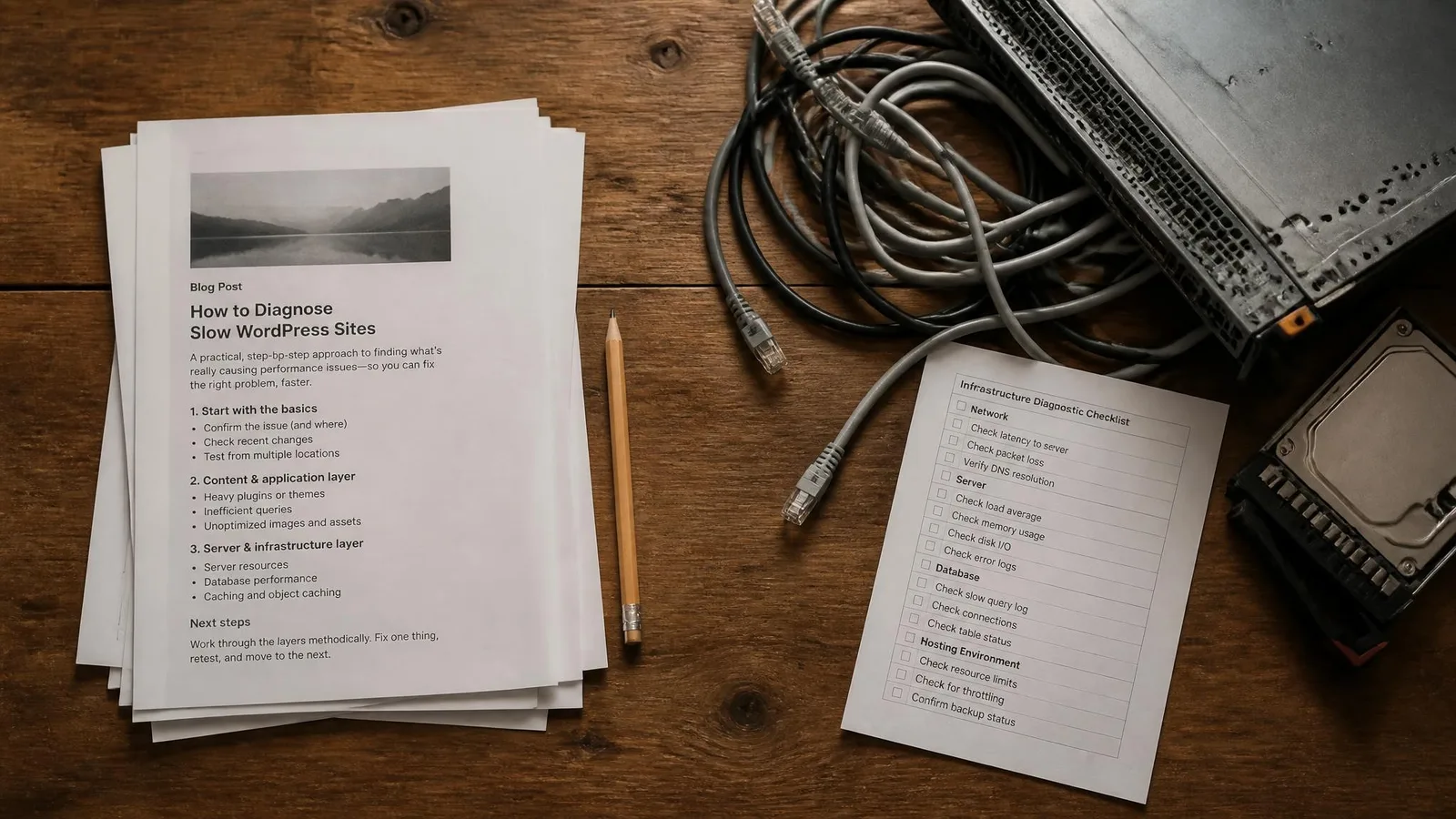
You’ve published 20, 30, maybe 50 posts. Organic traffic hasn’t moved. It feels like the content is disappearing into a void, and the question keeps circling: why your blog posts are not ranking even though you keep publishing content?
The answer might be that Google has never read most of those pages. Without Search and AI visibility, even strong writing is invisible.
How Do I Know If Google Can Find My Pages
Open Google Search Console. Go to the Pages report (previously called Coverage). Check how many URLs are indexed versus submitted. If dozens of published pages show as “Excluded,” “Noindexed,” or “Discovered but not indexed,” you have a crawlability problem. Rewriting those pages is pointless because Google hasn’t evaluated them yet.
A content problem looks different. It shows up as indexed pages that don’t rank or don’t convert. The page is in the game; it’s just losing. A crawlability problem means the page never entered the game at all.
The discriminator: if your indexed page count is significantly lower than your published page count in Search Console, the problem is structural, not editorial.
Sign 2: How to Tell If You Have a Technical SEO Problem, the Whole Site Drops at Once
Traffic dropped, but not on 1 article. It dropped across every page at roughly the same time. You checked. It wasn’t seasonal.
A page-by-page traffic decline that varies by post is almost always a content signal: individual pages falling out of favour because the content no longer matches what searchers want. A site-wide drop that hits all pages within the same week is a structural SEO event: an algorithm update, a manual penalty (a direct action by Google’s review team, distinct from an algorithm change), a hosting outage, or a misconfigured redirect.
SEO and content marketing solve different problems and use different processes, a point SEO Sherpa reinforced in their May 2026 analysis. A site-wide traffic drop SEO cause demands a structural diagnosis, not a content rewrite.
The frame of technical SEO vs content SEO matters here. Technical SEO ensures the site itself is healthy; content SEO ensures individual pages earn their rankings. When every page drops at once, the patient is the site, not the page.
How to Check
Cross-reference the drop date in Google Search Console’s Performance report against Google’s confirmed algorithm update history. If the dates align, you’re looking at a structural SEO problem.
The discriminator: if the drop hit the whole site within the same week, it’s structural. If individual posts declined at different times, investigate content quality on those specific pages.
Sign 3: A Weaker Competitor Is Outranking You on Terms You Have Covered Thoroughly
You’ve written a thorough, well-researched post on a topic. A competitor’s thinner article ranks above it. The instinct is to make your content longer or better, but that’s often not the problem.
This is when to fix SEO, not content. Use a free backlink checker (Ahrefs’ free tier or Moz’s Domain Authority checker) to compare referring domains. If the competitor has significantly more backlinks or a higher domain authority, no content improvement alone will close the gap. This is a link equity and domain trust problem, not a writing problem. The fix is link acquisition and authority building, not another draft.
Important nuance: if your authority metrics are comparable to the competitor’s and they’re still outranking you, then content quality, relevance depth, and engagement quality signals are worth examining. The discriminator works in both directions. Domain age, topical authority, and brand mentions all contribute to ranking signals alongside backlinks.
The discriminator: compare referring domains and domain authority. If theirs is significantly higher, it’s an authority gap. If it’s comparable, the problem is more likely on-page content.

Sign 4: Several of Your Pages Are Quietly Fighting Each Other for the Same Keyword
You have multiple posts on similar topics, perhaps a “what is X” post and a “how to do X” post that both target the same primary keyword. Neither ranks strongly. Publishing more on the same topic hasn’t helped.
Keyword Cannibalisation Signs
The clearest test: run a site: search in Google. Type site:yourdomain.com [keyword] and see how many of your own pages appear. If more than 1 page is competing for the same term, you have cannibalisation.
This is a site architecture problem, not a writing problem. The fix is consolidation, canonicalisation (telling Google which page to treat as the primary version), or restructuring your internal linking hierarchy. Rewriting either page without addressing the architecture makes the cannibalisation worse.
Cannibalisation is one of the most common findings when you use an SEO audit to identify real problems, and it’s invisible without one. Fixing it often requires structural decisions that founders may want professional input on, and understanding what an SEO audit actually costs before hiring is a sensible first step.
The discriminator: if a site: search for your target keyword returns more than 1 of your own pages, you have a cannibalisation problem that no content rewrite will solve.
Sign 5: You Rank but Nobody Clicks
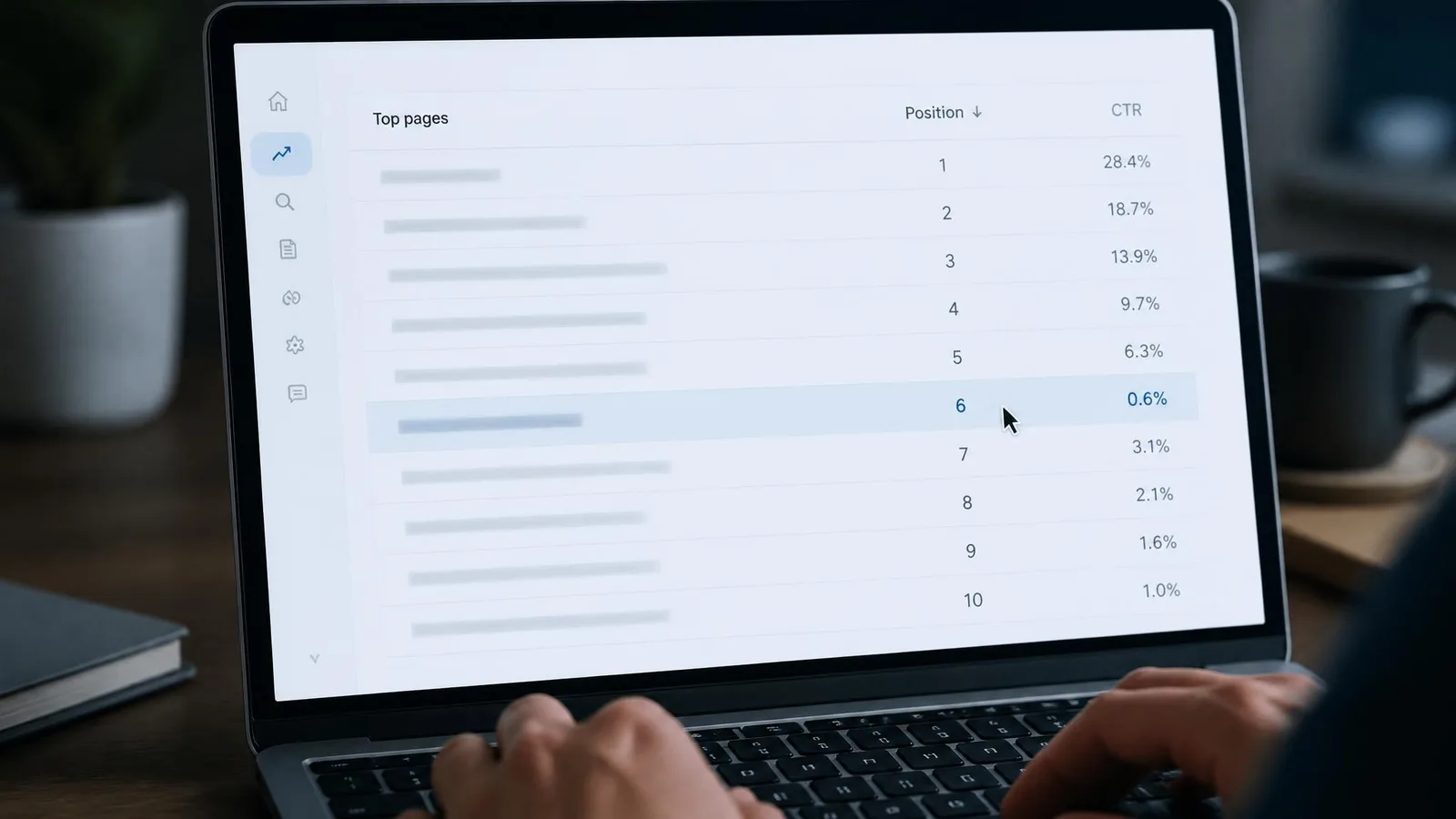
You check your rankings and see pages sitting in positions 4–10 on page 1, or on page 2. The assumption is that the content needs to be better to climb. But if you want to know how to diagnose SEO problems at the snippet level, the answer isn’t on the page itself.
Page Ranks but No Clicks SEO Fix
Open the Performance report in Google Search Console and filter by page. If a page has a reasonable ranking position (1–15) but a click-through rate noticeably below what you’d expect for that position, the problem is the title tag and meta description, not the content below the fold.
The content on the page may already be high-quality content. But if the snippet doesn’t earn the click, that quality is invisible to the reader. Rewriting the page body doesn’t fix a bad snippet. The fix is to test a more compelling title tag and meta description, one that matches the searcher’s intent by how to find the questions your customers are actually searching, includes the keyword naturally, and gives a clear reason to click.
The discriminator: if your CTR is well below the expected range for your ranking position, test a new title tag and meta description before touching the page content.
One More Thing: AI Search Has Its Own Set of Rules
AI answer engines like Perplexity, ChatGPT Browse, and Google’s AI Overviews pull citations based on crawlability, structured data, and schema signals, not content quality alone. A site with technical foundations that block clean extraction will be absent from AI answers even when its content is strong.
If your site shows up in Google rankings but doesn’t appear in AI answer citations on the same topic, that’s a structural signal worth investigating. Schema markup, structured formatting, and crawl accessibility all contribute to Search and AI visibility. The goal for founder-led businesses is to show up in Google and AI answers, and technical SEO determines whether that second surface is even possible.
This isn’t a separate category of problem. It’s a sixth dimension of the same diagnostic. Better writing won’t change whether an AI engine can extract and cite the content cleanly. AI-ready content requires structural, crawlable, schema-supported foundations. The fix is technical, not editorial.
Run the Check Before You Spend Anything
Here’s the quick-reference version of all 5 discriminator tests:
- Indexed page count: check Search Console. If published pages aren’t indexed, it’s structural.
- Site-wide drop timing: if every page dropped in the same week, it’s a site-level event.
- Authority comparison: if a weaker competitor outranks you, compare backlink profiles before rewriting.
- Cannibalisation check: run a
site:search. Multiple pages on the same keyword means architecture, not writing. - CTR vs position: if you rank but don’t get clicks, test the snippet before touching the body.
More content isn’t always the answer. A structural SEO problem won’t respond to more writing. But a content quality problem won’t be fixed by a technical audit either. The diagnosis has to come first.
If you want to start with a free SEO audit tool to check your website, here’s a practical first step. Audit a URL free and see how AI search reads it. Submit a page, and you’ll get a read on the structural signals that determine whether AI search can find and cite your content. It’s a 2-minute check that tells you whether you’re dealing with a visibility gap before you spend anything else.
Organic growth starts with knowing which problem you actually have.

Frequently Asked Questions
Why does my competitor rank above me when their content is worse than mine?
In most cases, the gap is authority, not quality. Check their backlink profile. If they have significantly more referring domains, their domain trust is outweighing your content advantage. That’s an SEO problem, specifically a link equity problem, not a signal to rewrite your post.
Should I hire an SEO agency or create more content?
Run the 5-sign diagnostic first. If 2 or more of the signs apply to your site, start with the SEO audit; more content on a broken foundation amplifies the problem. Lean marketing teams often face a false choice between hiring an agency and creating more content, when what they need first is a clear diagnosis. If your technical foundations are clean and the issue is content depth or authority, then strategic content investment makes sense.
How do I know if my traffic drop is an SEO problem or a content problem?
Check whether the drop hit 1 page or many. A page-by-page decline points to content. A site-wide drop that lines up with an algorithm update date is structural. Google Search Console’s Performance report and algorithm update timeline are your 2 starting tools.
My content is ranking on Google but I’m not showing up in AI answers. What’s wrong?
AI answer engines cite content they can extract cleanly. Structured formatting, schema signals, and crawlability all matter. If your Google rankings are healthy but AI citations are absent, that’s a structural SEO signal, not a content quality gap.
cpywrk
Every article here was made by cpywrk itself: researched, drafted, and run through the same quality and GEO checks the product applies to customer content, then read and approved by a person before it publishes. The blog is the proof.
Related reading
When to Use AI for Content: 7 Jobs to Delegate, 3 to Keep
Discover which content tasks AI handles reliably and which three you must keep yourself, based on where AI is confidently wrong about real-world facts.
7 min read
8 Ways to Keep Your Brand Voice in AI Copywriting
AI drafts default to generic. Here are 8 interventions, from prompt setup to post-draft editing, that keep your brand voice in AI copywriting intact.
6 min read
6 Checks to Run Before Publishing Anything a Machine Drafted
Run these 6 checks before publishing AI content to catch hallucinations, brand voice drift, broken links, and the errors fluency alone won't reveal.
7 min read