6 Checks to Run Before Publishing Anything a Machine Drafted
Run these 6 checks before publishing AI content to catch hallucinations, brand voice drift, broken links, and the errors fluency alone won't reveal.

In 1999, NASA lost the Mars Climate Orbiter because one engineering team used metric units and another used imperial. The spacecraft’s software worked perfectly. Every calculation ran without error. The output just happened to be wrong, and nobody caught it before the command sequence fired. That is the exact problem with AI-drafted content: the output reads fluently, the sentences parse correctly, and the facts can still be fabricated.
I built this as an AI content review checklist for small teams and solo reviewers. Here are the 6 checks, in the order I recommend running them: (1) fact and source verification, (2) link and anchor text confirmation, (3) brand voice read-through, (4) structural coherence scan, (5) titles, subheadings, and alt text review, (6) the stranger trust test. Each check is designed to take one person under 10 minutes.
The sequence is a recommendation, not a ranking. I ordered the checks so a solo reviewer working against a deadline hits the highest-yield steps first, catching the claims most likely to be wrong for the least effort. When trust is the real competitive advantage, your review process is where you earn it.
Check 1: Verify Every Specific Claim Before It Becomes Your Reputation
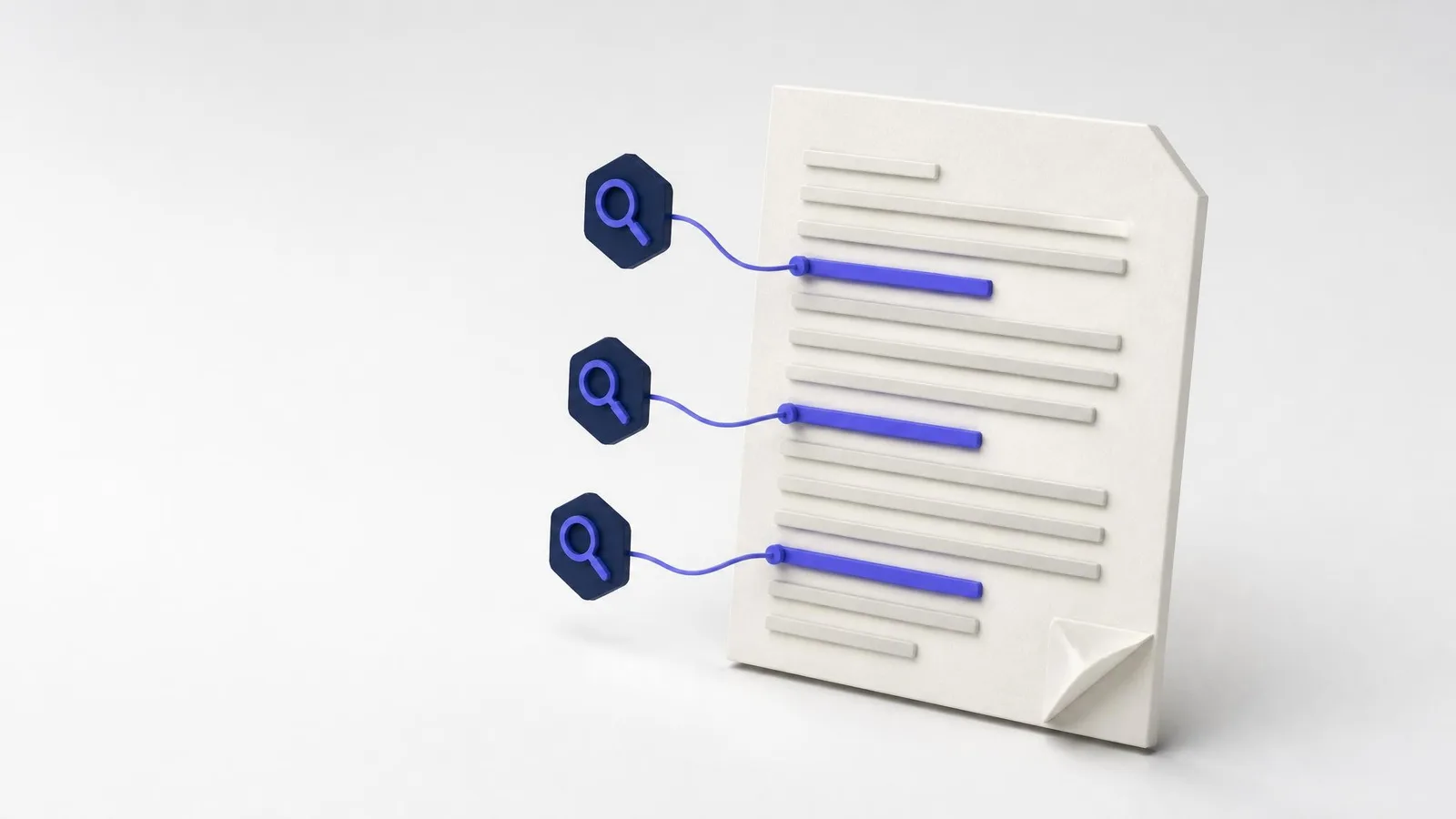
This check comes first because specific claims are where AI drafts cause the most reputational damage. A wrong statistic, a misattributed quote, or a fabricated study title can undermine an entire article, and these are the exact errors most likely to survive a skim read. A language model states a wrong fact with the same syntactic confidence as a correct one. The draft reads fluently either way. Fluency tells you nothing about accuracy.
I don’t read every sentence. I scan for claim-type markers: numerals, quotation marks, named authors or organizations, and specific dates. These are the highest-risk categories, and checking only these catches the claims most likely to be wrong without requiring a line-by-line read. When I find a number, I verify it against the primary source. When I see a name, I confirm the person exists and actually said what the draft attributes to them.
This is a guide to fact-checking AI content in practice, not in theory. Google’s guidance on AI-generated content recommends reviewing it for accuracy and quality before publishing. That recommendation extends to the full page, including titles, meta descriptions, and alt text. The guidance exists because the problem is real: confident-sounding false claims are the highest-risk error category in any AI draft.
For a typical blog post with 4 or 5 specific claims, this check usually takes under 10 minutes.
Check 2: Confirm Every Link Actually Goes Somewhere Real
AI drafts frequently insert links to pages that sound plausible but don’t exist. I’ve seen drafts point to internal URLs that follow a site’s naming pattern perfectly while leading to a 404. The anchor text matched. The slug looked right. The page had never been published.
The method is simple: click every link in the draft. Confirm it resolves to a live page. Then confirm the anchor text accurately describes what the reader will find on the other side. A live link to the wrong page is as misleading as a broken one.
External links need the same treatment. AI may cite a real-sounding study URL that 404s or points to a completely different document. I treat every link as guilty until I’ve clicked it and confirmed the destination matches the promise.
For a typical post, this check usually takes 3 to 5 minutes. It’s almost always skipped, which is exactly why it’s worth doing.
Check 3: Read It Out Loud for Brand Voice Drift
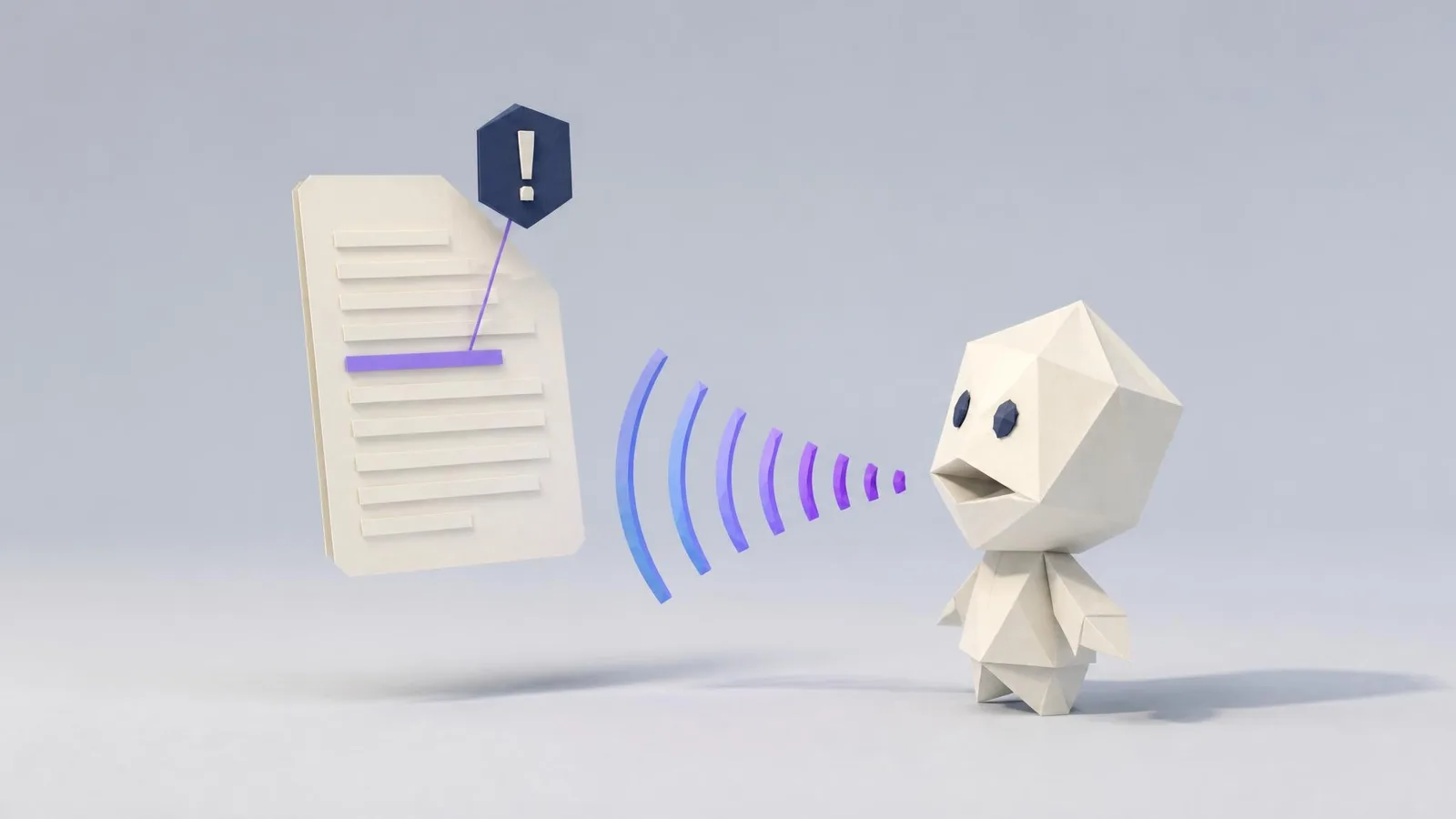
Brand voice drift in AI drafts has a specific sound: hedged phrasing like “it’s important to note that,” generic enthusiasm like “in today’s rapidly evolving landscape,” passive constructions, and corporate filler that nobody in the business would actually say. These phrases slip past a silent read because they’re grammatically correct. They only become obvious when you hear them.
The read-aloud method forces you to process every word at speaking pace. That’s what makes drift audible. I concentrate on the introduction and conclusion first, where AI drift runs heaviest, then spot-check the transitional sentences between sections.
The test question is: “Would I actually say this?” If a sentence sounds like it was written by a very enthusiastic stranger, it needs a rewrite. Running an AI content brand voice check this way takes practice, but even the first pass usually catches the worst offenders. The goal is content that sounds like your business, not like a template.
Once the voice passes, confirm the text is readable enough for your audience. Sentence rhythm and reading level are separate problems, and the deeper methodology for that lives in its own guide.
Check 4: Scan the Structure Before You Fix the Sentences
Structural problems are invisible at sentence level. Two sections can each read perfectly while making the same argument under different headings. A conclusion can introduce a new idea instead of closing the existing one. A middle section can contradict an earlier claim. None of these errors show up when you’re editing individual sentences.
Here’s how to review machine-drafted text for structural coherence: read only the H2 and H3 headings in sequence, then read only the first sentence of each paragraph. This bird’s-eye scan reveals whether the logical argument holds without requiring you to read every word. I’m looking for repeated points, contradictions between sections, and conclusions that don’t follow from the body.
This scan also surfaces missing transitions. AI drafts in longer pieces often jump from one idea to the next with no connecting logic, leaving the reader to guess how the sections relate. When I’m editing AI-generated content, catching a structural gap at this stage saves me from fixing 5 paragraphs of sentences that shouldn’t exist in the first place.
This is an AI content editing checklist step that takes under 10 minutes for most posts and prevents the most expensive kind of rework.
Check 5: Don’t Forget the Titles, Subheadings, and Alt Text

Most reviewers stop at body copy. Google’s guidance on AI-generated content recommends reviewing titles, meta descriptions, and alt text as part of the review scope. These elements carry weight with both readers and search engines, and AI gets them wrong in ways that aren’t obvious.
I check the H1 and H2 headings for accuracy first. AI sometimes introduces a factual claim in a heading that contradicts or overstates what the body actually says. A heading that promises “7 Proven Methods” when the body lists 5 unproven suggestions is the kind of error that erodes trust before the reader finishes the first paragraph.
Then I check the meta title and meta description. AI occasionally writes a meta description that promises something the article doesn’t deliver, which means the reader clicks expecting one thing and finds another. That mismatch damages credibility more than a missing meta description would.
Finally, I check alt text for images. AI-generated alt text can describe the wrong content or include claims that aren’t visible in the image itself. Getting these details right protects credibility.
Check 6: The Stranger Trust Test
Read the piece as someone who has never heard of your company, your name, or your product. They owe you no goodwill and have no context. Read only the introduction and the first claim in each section, and mark every spot where that reader would ask “says who?” or “how do you know?”. Each mark is a claim that needs a source, an example, or a softer word. Then ask one question about the whole piece: would this stranger trust it enough to act on it, whether that’s booking a call, trying the method, or sharing it? If the honest answer is no, the problem is usually a missing example or a claim stated more strongly than you can back up, not the writing. This takes under ten minutes and catches what your own familiarity hides.
Frequently Asked Questions
How do you catch AI hallucinations in blog posts?
The highest-risk hallucinations are confident-sounding specific claims: statistics, named authors, dated studies, and attributed quotes. I scan for numerals and quotation marks first, then verify each one against a primary source rather than another AI-generated page. A fluent, plausible sentence is not a signal of accuracy. Learning how to catch AI hallucinations in blog posts starts with targeting these claim types rather than reading every line.
Does Google require fact-checking of AI content?
Google’s guidance on AI-generated content advises reviewing it for accuracy and quality before publishing, including titles, meta descriptions, and alt text. Google does not penalize content for being AI-assisted. The guidance is about review quality, not content origin. Whether Google requires fact-checking of AI content is the wrong framing; the guidance recommends it as a quality practice.
How long does it take to review AI-written content?
The full pass usually takes 30 to 45 minutes for a typical post. The fact-check varies most, depending on how many specific claims the draft makes. How long it takes to review AI-written content depends on claim density, but the full pass is built for lean marketing teams working against real deadlines.
What to Do Next
Run Check 1 and Check 2 on your next draft before anything else. They usually take 10 to 15 minutes together and catch the errors most likely to damage credibility.
If you want to see how cpywrk handles this in the workflow, the review process is built into the content production system so nothing ships without it. Start free trial
cpywrk
Every article here was made by cpywrk itself: researched, drafted, and run through the same quality and GEO checks the product applies to customer content, then read and approved by a person before it publishes. The blog is the proof.
Related reading
8 Ways to Keep Your Brand Voice in AI Copywriting
AI drafts default to generic. Here are 8 interventions, from prompt setup to post-draft editing, that keep your brand voice in AI copywriting intact.
6 min read
6 Reasons AI Content Reads as Generic, and What Fixes It
AI-generated content that sounds the same as everyone else's is a pre-draft problem, not a model problem. Here are 6 causes and the fixes that actually work.
6 min read
7 Signs of AI-Generated Text (and How to Fix Them)
Learn the 7 signs of AI-generated text that readers notice immediately, with before-and-after repair examples you can use to edit your own AI-assisted drafts.
6 min read