7 Ways to Start a Blog Post That Are Not "In Today's Landscape"
Tired of AI drafts that open with "In today's landscape"? Here are 7 ways to start a blog post, each with a real written example you can use today.

You know the opening scene of Groundhog Day? Bill Murray wakes up, hears Sonny and Cher, and realizes he’s living the same morning again. That’s what reading AI drafts feels like. Every single one opens with some version of “In today’s rapidly evolving landscape,” and every single time, I know exactly what’s coming next: nothing worth reading. If you’re trying to figure out how to start a blog post with a blog intro that hooks readers, here’s the fix.
A blog intro fails when it scene-sets instead of earning attention. The “In today’s landscape” opener commits to nothing, signals generic content, and loses readers before the second paragraph. The 7 techniques below are deliberate alternatives, each with a real written example, that turn a flat AI opening into AI-ready content worth reading.
Why “In Today’s Landscape” Is the Tell That Gives AI Away
AI models default to scene-setting openers because these constructions are everywhere in training data. They’re statistically safe. They commit to nothing, offend no one, and delay the argument indefinitely. That’s precisely why they feel hollow.
cpywrk’s own brand voice principles put it plainly. The canonical bad opener: “In today’s fast-evolving digital landscape.” The direct alternative: “You don’t need a full content team to show up in search.” One stalls. The other earns your attention in 12 words.
The generic opener tells your reader that the content that follows will also be generic. It sets an expectation the rest of the post rarely exceeds. The output feels generic or off-brand before the reader even reaches the second paragraph. As AI-assisted drafting has scaled, this problem has become the single most recognizable AI writing tell, a shift that AI copywriting trends in 2026 captures clearly. Naming alternatives to the “in today’s landscape” opener isn’t a style preference. It’s the difference between content people read and content people close.
The AI writing clichés to avoid aren’t limited to that one phrase. “In an era of unprecedented change,” “As businesses navigate an increasingly complex environment,” and “Now more than ever” all do the same thing: burn the reader’s goodwill before the argument begins. Every technique that follows is a deliberate choice to do something better.
7 Blog Post Opening Techniques That Actually Work
Each of the 7 blog post opening techniques below does something the scene-setter never can: it earns the reader’s attention before asking for their time. These are deliberate departures from the AI default. Every one includes a real written example you can steal, adapt, or use as a starting point for your next draft. Better blog openings start here.
Opening 1: The Direct Statement
The direct statement opens with the single most useful thing the article will say, stated plainly in the first sentence. No wind-up, no context, just the claim. If it lands, the reader stays. If it doesn’t, they weren’t the right reader.
Here’s what one looks like, and these are the kind of short, punchy blog intro examples that work:
Most of what you publish will never rank. Not because it’s bad, but because it’s indistinguishable from the 50 other posts saying the same thing in the same way. Content that ranks does one thing differently: it makes a specific promise in the first sentence and delivers on it before the reader has a reason to leave.
That’s it. Claim first, context second. The reader knows within 10 words whether this post is for them.
Opening 2: The Story Hook

The story hook opens with a specific moment, scene, or cultural reference that places the reader inside a situation before the argument begins. It borrows attention rather than demanding it. This is where storytelling blog intro examples live, and it’s the technique most likely to produce brand-aligned content because it carries voice and personality in a way generic openers never can.
Here’s what one looks like:
There’s a moment in Rocky II where Mickey tells Rocky to stay on his right hand. The whole fight plan depends on it. Rocky ignores the advice, switches to southpaw in the final round, and wins. Sometimes the best strategy is the one your coach told you not to try. That’s how I feel about publishing cadence. Every SEO guide says “post consistently.” The businesses I’ve watched grow fastest posted less, but made every piece count.
The structure is simple: reference, personal connection, pivot, article preview. The story resolves into the topic within 3 to 4 sentences.
Opening 3: The Provocative Question
The provocative question names the reader’s exact situation in a single sentence. It creates instant recognition. A vague question (“Have you ever thought about content marketing?”) does the opposite, because it could apply to anyone and therefore applies to no one.
Here’s a question opening for a blog post, with examples of what makes it work:
You’re publishing every week without a content team, and traffic hasn’t moved in 6 months. So why does every piece of advice you find assume you have a strategist, a writer, and an editor? This guide is built for the team of 1 who’s doing all 3 jobs and needs something that actually works at that scale.
One question, aimed squarely at one reader. If it’s their problem, they read on. If it isn’t, they move on. Both outcomes are fine.
Opening 4: The Counterintuitive Claim
The counterintuitive claim opens by stating the opposite of what the reader expects the article to say. It earns attention because the reader’s first instinct is to disagree, which means they keep reading to find out why they’re wrong.
The key: the claim has to be defensible, not clickbait.
Organic growth doesn’t start with SEO. It starts with saying something your competitors won’t. Every business in your space is targeting the same keywords, following the same playbooks, and producing the same content. The ones pulling ahead aren’t optimizing harder. They’re making claims specific enough to be wrong, and that specificity is exactly what makes their content worth finding.
The claim subverts the expected argument, then supports it with a reason in the same paragraph. The reader finishes the opening convinced it’s honest, not manipulative.
Opening 5: The Relatable Frustration

The relatable frustration opener names the exact situation the reader is in before offering any solution. Recognition is its own form of forward momentum: readers who feel seen keep reading.
The key is specificity. “Struggling with content?” is too broad. This is what specificity looks like:
I spent 2 hours writing an intro last Tuesday and it still sounded like the same very enthusiastic robot wrote it. I deleted it, tried again, got another version of “In today’s competitive market,” and closed my laptop. If you’ve hit that same wall where the AI gives you something technically correct and completely lifeless, this post is the fix I wish I’d found that night.
This technique works especially well for lean marketing teams, because the frustration of doing everything yourself and still getting generic output is one of the most universally recognized pain points in that audience. The opener names it, then pivots to forward motion.
Opening 6: The Anchored Statistic
A statistic without a human frame is just a number. It only lands if the reader already cares about what’s being measured. The anchored statistic technique pairs the data point with the human situation it describes, making the number feel real rather than performative.
The failure mode: leading with the number before establishing why it matters. A stat dropped cold in the first sentence forces the reader to supply their own context. Most don’t bother.
Here’s what a properly anchored version looks like:
You wrote 4 blog posts last month. You checked analytics every morning. Traffic moved sideways. You’re not alone. Most small-business content never reaches the audience it was written for, not because the ideas are bad, but because nothing in the first paragraph gave anyone a reason to stay. That’s the gap this post closes: how to write an opening that earns the click it already got.
The human situation comes first. The data point lands because the reader already sees themselves in it. That’s what makes the difference between a stat that informs and one that motivates someone to show up in Google and AI answers.
Opening 7: The Scene Drop
The scene drop opens in the middle of a specific moment. Instead of explaining the situation, it drops the reader directly into it, present tense, with enough detail that they feel they’re already there. This is the opposite of scene-setting. Scene-setting describes the world around the topic. The scene drop puts you inside a single moment within it.
Here’s what one looks like:
It’s 11:14 pm. The cursor is blinking on a blank Google Doc titled “Q3 Content Plan.” You’ve typed and deleted the first sentence 4 times. The AI assistant suggested “In today’s competitive landscape” and you closed the tab. Your coffee is cold. The post is due tomorrow morning, and the intro still doesn’t exist. You don’t need more time. You need a different way in.
The scene drop works especially well for founder-led businesses because founders running lean operations have specific, recognizable situations to draw from. The technique depends on that specificity: one moment, one detail, one feeling the reader instantly recognizes as their own.
How to Choose the Right Opening for Your Post
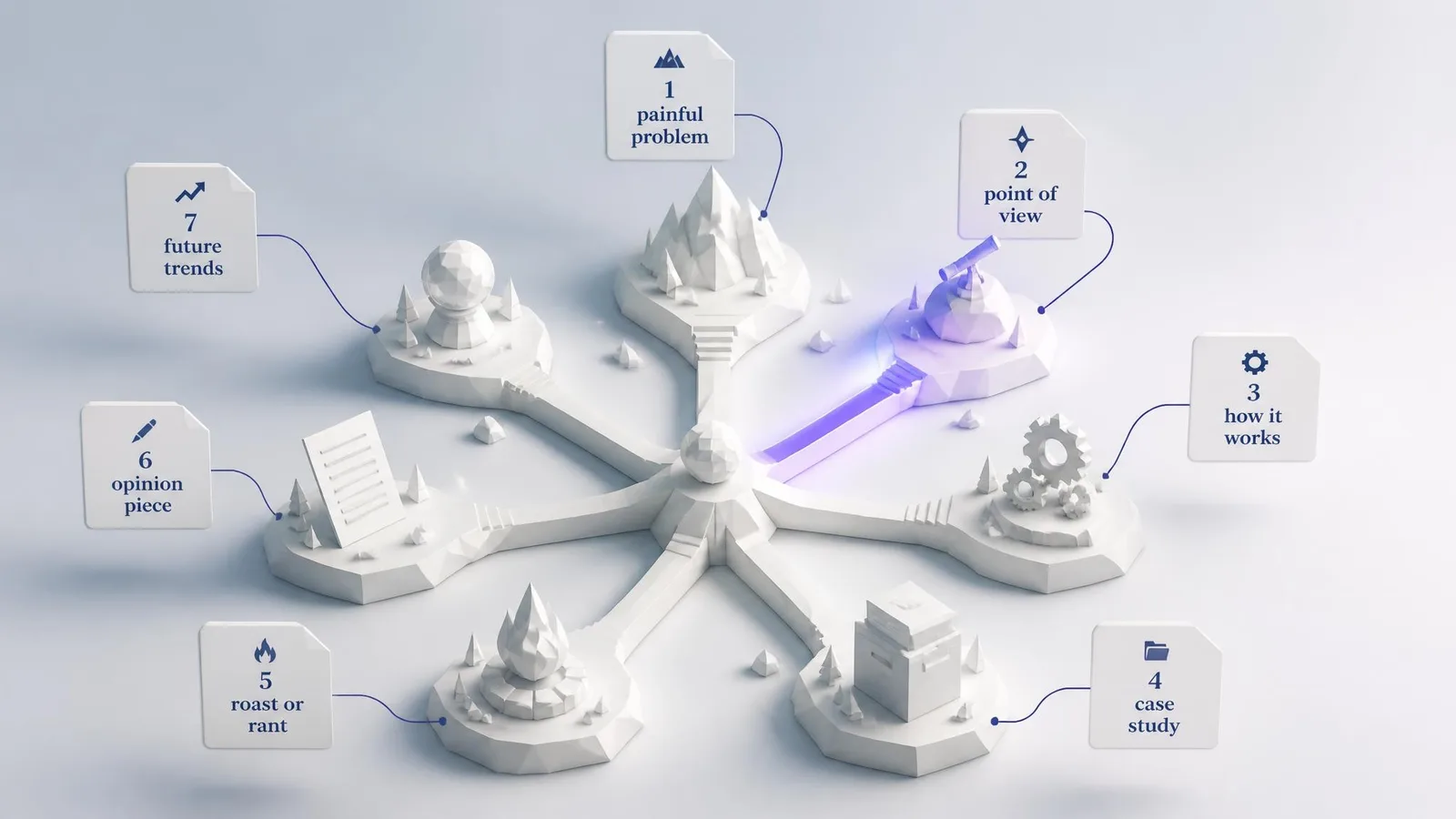
Match the technique to the emotional register of your topic. A post about a painful problem pairs with the relatable frustration or the question. A data-heavy post pairs with the anchored statistic. A personal opinion piece pairs with the direct statement or the counterintuitive claim.
Then match it to the reader’s relationship with the topic. If they already know the problem exists, skip the setup and lead with the solution or the contrarian take. If they don’t yet know they have the problem, a scene drop or story hook creates the realization.
Having a documented voice makes this easier. When you know how your brand sounds, you can tell immediately whether an opener fits or feels forced. If you don’t have that documentation yet, brand voice guidelines for small teams is a practical place to start.
The decision doesn’t need to be perfect. The wrong opener is always better than no opener. Pick one, write it, and fix it in revision if needed. How to write a blog intro isn’t about finding the one right answer. It’s about having enough options that you never default to the same stale sentence again.
Frequently Asked Questions
How do you write a blog post introduction that actually gets read?
Open with the thing the reader cares about most, in the first sentence. The intro’s only job is to earn the second paragraph. If your first line could appear unchanged on any post about any topic, it isn’t doing that job. Pick one of the 7 techniques above and lead with it.
Why does your blog intro sound generic?
Because AI defaults to scene-setting openers that commit to nothing. Phrases like “In today’s landscape” are statistically common in training data, which is why every model reaches for them first. The fix is choosing a specific technique and leading with a claim, question, or scene that only your post could open with.
How do you start a blog post without clichés?
Avoid any opener that could appear unchanged on any other post about any other topic. If the intro could be copy-pasted into a competitor’s article without anyone noticing, it’s a cliché. Test it: read your first sentence and ask whether it names something specific. If it doesn’t, rewrite it until it does.
How do you avoid generic AI blog openings?
Treat the AI-generated intro as a first draft of the body, not a first draft of the opening. Rewrite the intro first, before touching anything else. The opening sets the reader’s expectation for everything that follows. If it sounds like a template, the reader assumes the rest will too.
Conclusion
AI defaults to the opener that offends no one and earns no one. Every technique in this list is a deliberate choice to do something different: lead with a claim, a question, a scene, a stat with a human frame, or a frustration the reader already feels.
Here’s your next action. Pick any post you’ve written recently. Read the first paragraph. Ask yourself whether that opener could have been generated by any model for any topic. If the answer is yes, replace it with one of the 7 techniques above. That’s how to start a blog post without clichés.
Better openings produce content that converts, not just content that exists. Start free trial.
cpywrk
Every article here was made by cpywrk itself: researched, drafted, and run through the same quality and GEO checks the product applies to customer content, then read and approved by a person before it publishes. The blog is the proof.
Related reading
8 Ways to Keep Your Brand Voice in AI Copywriting
AI drafts default to generic. Here are 8 interventions, from prompt setup to post-draft editing, that keep your brand voice in AI copywriting intact.
6 min read
6 Checks to Run Before Publishing Anything a Machine Drafted
Run these 6 checks before publishing AI content to catch hallucinations, brand voice drift, broken links, and the errors fluency alone won't reveal.
7 min read
6 Reasons AI Content Reads as Generic, and What Fixes It
AI-generated content that sounds the same as everyone else's is a pre-draft problem, not a model problem. Here are 6 causes and the fixes that actually work.
6 min read