How to Write More Concisely: 9 Sentences Worth Cutting From Every Draft
Learn how to write more concisely by cutting 9 recurring sentence patterns. Each shown as written and as cut, with a plain-English reason why the cut works.

Miles Davis recorded Kind of Blue in 2 sessions. No overdubs, no second takes, no filler. Every note on that album earns its place because Davis cut the rest before the tape rolled. I think about that record every time I sit down to edit a draft.
I should. Our own style guide at cpywrk once contained 440 em dashes while its rules explicitly banned them. Filler survives even when the writer knows the rules.
Learning how to write more concisely comes down to recognizing 9 recurring sentence shapes: expletive constructions, nominalizations, redundant pairs, unnecessary qualifiers, passive voice in business copy, prepositional phrase stacking, throat-clearing openers, AI hedge phrases, and restated conclusions. Name the pattern, cut the sentence.
What follows are those 9 patterns, each shown as written and as cut, with a 1-line reason why the cut works. These are the sentences to cut when editing your own writing, and they’re the same ones I catch in every draft I review. Cutting for conciseness doesn’t mean losing your voice; it means clearing the path so the voice comes through, something brand voice guidelines for small teams can help you protect.
Why Drafts Stay Long Even When You Know Better
Your brain reads what it intended, not what’s on the page. That’s why a third pass through the same draft catches fewer problems than the first. The filler patterns feel natural to the person who produced them because they’re cognitive defaults, the same constructions that person reaches for in every email, every landing page, every blog post.
AI-assisted drafting has added a new layer. Tools trained on massive corpora produce their own habitual filler: hedge openers, transitional padding, false intensifiers that sound fluent on first read but carry zero meaning. If you’re editing drafts that came from a tool, you’re now hunting 2 categories of filler: yours and the model’s. The AI copywriting trends 2026 landscape makes this pattern recognition even more relevant.
Re-reading won’t fix this. Pattern recognition will. A named list of specific sentence shapes lets you search for what’s wrong rather than try to sense it.
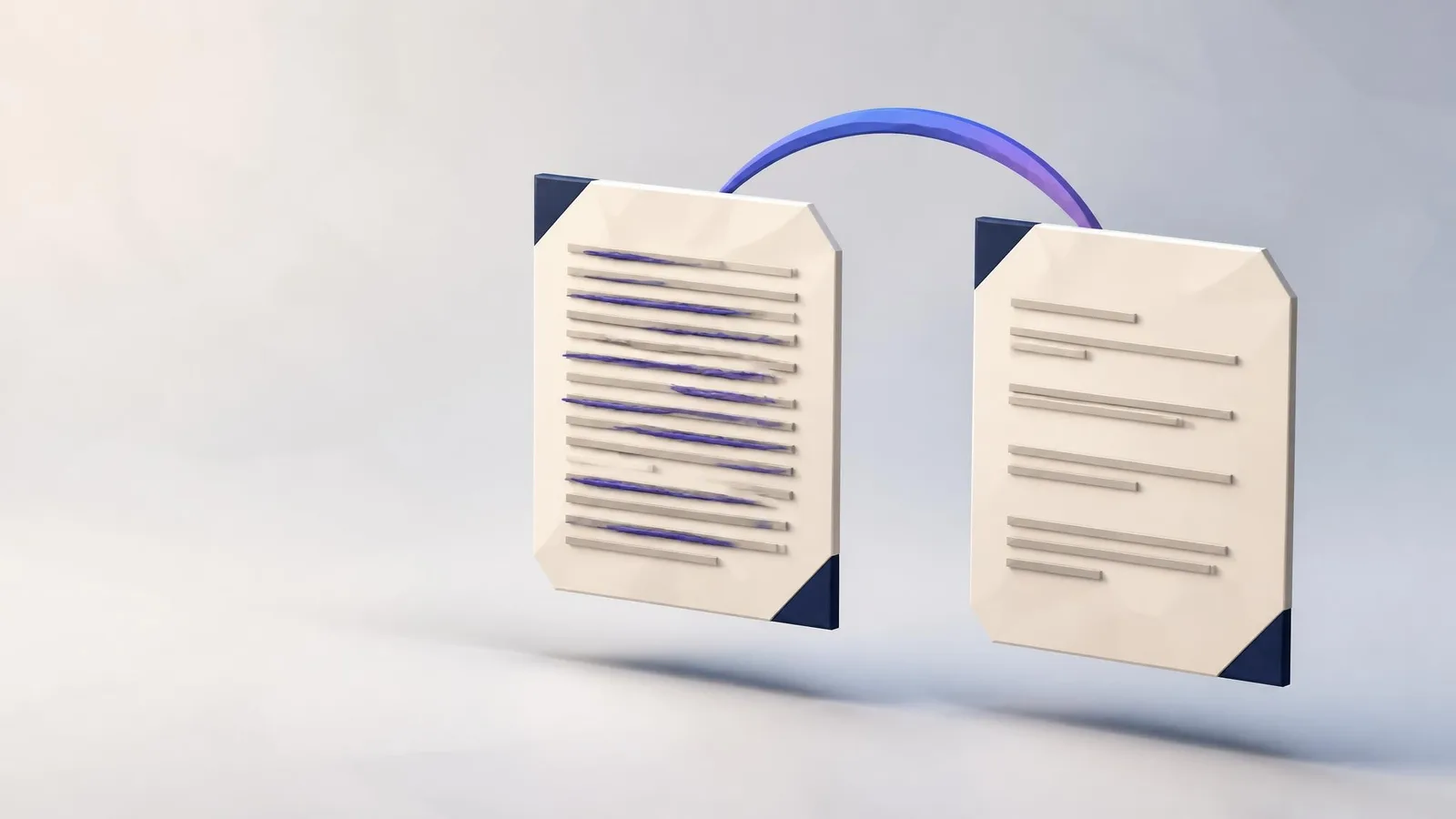
9 Sentence Patterns Worth Cutting Every Time
-
Expletive constructions. As written: “There is a reason this approach works for lean marketing teams.” As cut: “This approach works for lean marketing teams because.” The grammatical subject is buried behind “there is.” Move it to the front, and the sentence starts doing its job immediately.
-
Nominalizations. As written: “We need to make a decision about the content calendar.” As cut: “We need to decide on the content calendar.” Nominalizations convert verbs into noun phrases, adding 2 to 4 words per sentence. “Provide an explanation” becomes “explain.” “Conduct an analysis” becomes “analyze.”
-
Redundant pairs. As written: “Each and every landing page needs a clear CTA.” As cut: “Every landing page needs a clear CTA.” Pairs like “true and accurate,” “first and foremost,” and “each and every” always contain 1 word doing the job of 2, a category of wordiness the UNC Writing Center documents across both academic and business prose. Cut to the stronger word.
-
Unnecessary qualifiers. As written: “This is a very important update for our team.” As cut: “This is an important update for our team.” Words like “very,” “really,” “basically,” “actually,” and “generally” weaken the claims they’re meant to strengthen. The UNC Writing Center identifies these as habitual filler that appears across business and academic writing alike. Delete on sight.
-
Passive voice in business copy. As written: “A decision was made by the team to pause the campaign.” As cut: “The team decided to pause the campaign.” Passive voice hides who does what. Cutting passive voice in business writing restores clarity and accountability in a single edit.
-
Prepositional phrase stacking. As written: “The results of the analysis of the data from the quarterly survey.” As cut: “The quarterly survey results.” The UNC Writing Center flags prepositional stacking as a primary driver of sentence inflation. A possessive or adjective almost always replaces a chain of “of” phrases.
-
Throat-clearing openers. As written: “In this section, I’m going to walk you through the steps for updating your homepage.” As cut: “Here’s how to update your homepage.” The article is already doing the explaining. Cut the announcement and start with the thing.
-
AI hedge phrases. As written: “It is worth noting that your bounce rate may indicate a content quality issue.” As cut: “Your bounce rate indicates a content quality issue.” Phrases like “it is worth noting that,” “needless to say,” and “it goes without saying” are among the most common openers in AI-generated text. If you edit drafts that came from a tool, these are your first search targets. Removing filler words from writing starts with treating these as a named pattern.
-
Restated conclusions. As written: “So, in summary, what we’ve established is that concise copy converts better.” As cut: “Concise copy converts better.” If the point was made in the paragraph above, it doesn’t need announcing again. Delete the recap and end on the last real sentence.

How Cutting These Patterns Affects Content That Ranks
Concise writing is a reading level signal for content rankings and trust. AI retrieval systems extract self-contained chunks from pages. A sentence padded with qualifiers, expletive constructions, and prepositional chains is harder for those systems to parse cleanly. Concise writing tips tend to focus on style. The strategic stakes go further: when you edit wordy writing, you’re making content easier for both humans and machines to use.
Purdue OWL frames concise writing as using the most effective words, not the fewest, a distinction worth internalizing. The goal is precision. Strong sentences that say exactly what they mean are more likely to show up in AI answers and traditional search results, improving your Search and AI visibility over time.
Brand-aligned content that cuts filler also reads more distinctly human, which matters as AI-generated copy becomes the default across categories. For founder-led businesses and lean marketing teams editing their own copy, a pattern-based editing pass takes 10 minutes per draft. That’s a small time cost for content that ranks and converts.
Conclusion
These 9 patterns are habitual. Naming them is enough to start catching them. 1 editing pass with this list changes the draft.
Cut the scaffolding, and the idea comes through louder. That’s how to make marketing copy shorter without making it quieter. The patterns hide in every draft. Now you know what to search for.
When you’re ready for content that ranks and converts without the manual grind, Start free trial.
Editing Pass: A Quick Reference
Run this self-editing checklist for writers against any draft before publishing. These are the words to delete when proofreading, organized by the sentence shape that carries them. Our quality checks process applies many of these same principles automatically.
- Expletive constructions. Find “there is” and “it is” openers. Move the real subject to the front.
- Nominalizations. Find noun phrases hiding a verb. Convert back to the verb.
- Redundant pairs. Find paired synonyms. Keep the stronger word.
- Unnecessary qualifiers. Find “very,” “really,” “basically,” “actually.” Delete them.
- Passive voice. Find “was [verb]ed by.” Rewrite with the agent as the subject.
- Prepositional phrase stacking. Find chains of “of” phrases. Replace with a possessive or adjective.
- Throat-clearing openers. Find “In this section” and “I’m going to.” Start with the thing itself.
- AI hedge phrases. Find “it is worth noting,” “needless to say.” Delete the entire phrase.
- Restated conclusions. Find “so, in summary” and “what we’ve established.” Delete the recap sentence.
cpywrk
Every article here was made by cpywrk itself: researched, drafted, and run through the same quality and GEO checks the product applies to customer content, then read and approved by a person before it publishes. The blog is the proof.
Related reading
8 Ways to Keep Your Brand Voice in AI Copywriting
AI drafts default to generic. Here are 8 interventions, from prompt setup to post-draft editing, that keep your brand voice in AI copywriting intact.
6 min read
6 Checks to Run Before Publishing Anything a Machine Drafted
Run these 6 checks before publishing AI content to catch hallucinations, brand voice drift, broken links, and the errors fluency alone won't reveal.
7 min read
6 Reasons AI Content Reads as Generic, and What Fixes It
AI-generated content that sounds the same as everyone else's is a pre-draft problem, not a model problem. Here are 6 causes and the fixes that actually work.
6 min read