7 Ways to Find Topics Your Customers Actually Search For
Finding topics your customers actually search for doesn't require expensive tools. Here are 7 sources, what each is good for, and where each one misleads.

In the first season of The Bear, Carmy Berzatto inherits a sandwich shop and spends weeks perfecting a single beef recipe while his staff begs him to expand the menu. The lesson lands quietly: depth on the right thing beats breadth on everything. Finding topics your customers actually search for works the same way. For founder-led businesses and lean marketing teams, the goal is a tight set of content topics your customers actually want, filtered by intent, written from sources that reveal what buyers type when they’re close to a decision.
Here are the 7 sources I cover in this guide: Google Search Console, Reddit and niche forums, G2 and review platforms, Google autocomplete and People Also Ask, keyword research tools, sales calls and support conversations, and competitor content gap analysis. Each section explains what the source is good for and where it misleads.
I’ve structured this as a field guide for identifying high-intent customer searches, with honest caveats on every method. If you’re choosing what to publish next month on a limited budget, these 7 sources give you a repeatable process for content idea research that prioritizes revenue-relevant traffic over vanity volume.
Why Volume Is the Wrong Starting Point
A 50-search-per-month query where the person typing it is clearly evaluating a purchase can drive more revenue than a 5,000-search query where the intent is purely educational. I see this pattern constantly: someone pulls up a keyword tool, sorts by volume, and picks the biggest number. The resulting article attracts readers who will never buy anything.
Content idea research that starts with a volume ranking and works backward tends to produce exactly this kind of mismatch. Identifying high-intent customer searches means looking for the language of someone close to a decision: comparisons, pricing questions, “best for” queries, problem-specific phrasing. The goal for a lean marketing team is a tight set of high-intent topics written well, producing content that ranks and content that converts. A broad catalog of thin posts chasing traffic numbers is the opposite of topical authority and organic growth.
Source 1: Google Search Console
Google Search Console’s Performance report shows the exact queries real people typed before clicking through to a site. It’s one of the few free tools where the data reflects confirmed search behavior rather than modeled estimates, which makes it the most trustworthy starting point for content idea research when you don’t have a tool budget.
The move I find most useful: filter queries by impressions with low clicks. These are topics the site is almost ranking for but hasn’t covered well yet. They’re the highest-leverage opportunities because Google already associates the site with that query. Writing a focused piece on that topic often produces results faster than chasing an entirely new keyword.
Where it misleads: Search Console only shows queries for pages that already exist and have earned some impressions. It can’t surface topics in categories the site has never touched. Using Google Search Console for content ideas works best as a maintenance and expansion tool, filling gaps around existing content rather than discovering greenfield topics. There’s also a processing delay, so the data you see is never quite real-time.
I keep a running list of these low-click, high-impression queries and revisit it monthly. If you want more practical content guides on turning Search Console data into published posts, that’s a good next bookmark.

Source 2: Reddit, Quora, and Niche Forums
Reddit threads and Quora answers are where customers describe problems in their own words. They don’t use marketing terminology. They don’t use vendor language. They describe a frustration, ask a question, and wait for someone to reply in plain English. That raw phrasing is gold for content planning.
Reddit as a keyword research source for B2B content works because subreddit discussions surface the frustrations, vocabulary, and adjacent questions buyers bring to a topic before they’ve found a vendor. I search the subreddit for a job-to-be-done rather than a product category. “How do I know if my content is working” surfaces better topic seeds than any brand name or feature list.
Where it misleads: Social conversations reflect what people say publicly and performatively. Search queries reflect what people type when they think no one is watching. The 2 sources reveal different facets of audience behavior, and both have blind spots the other fills. A question that gets 200 upvotes on Reddit may never show meaningful search volume, and a query with 1,000 monthly searches may never appear in a forum thread.
Source 3: G2, Capterra, and Review Platforms
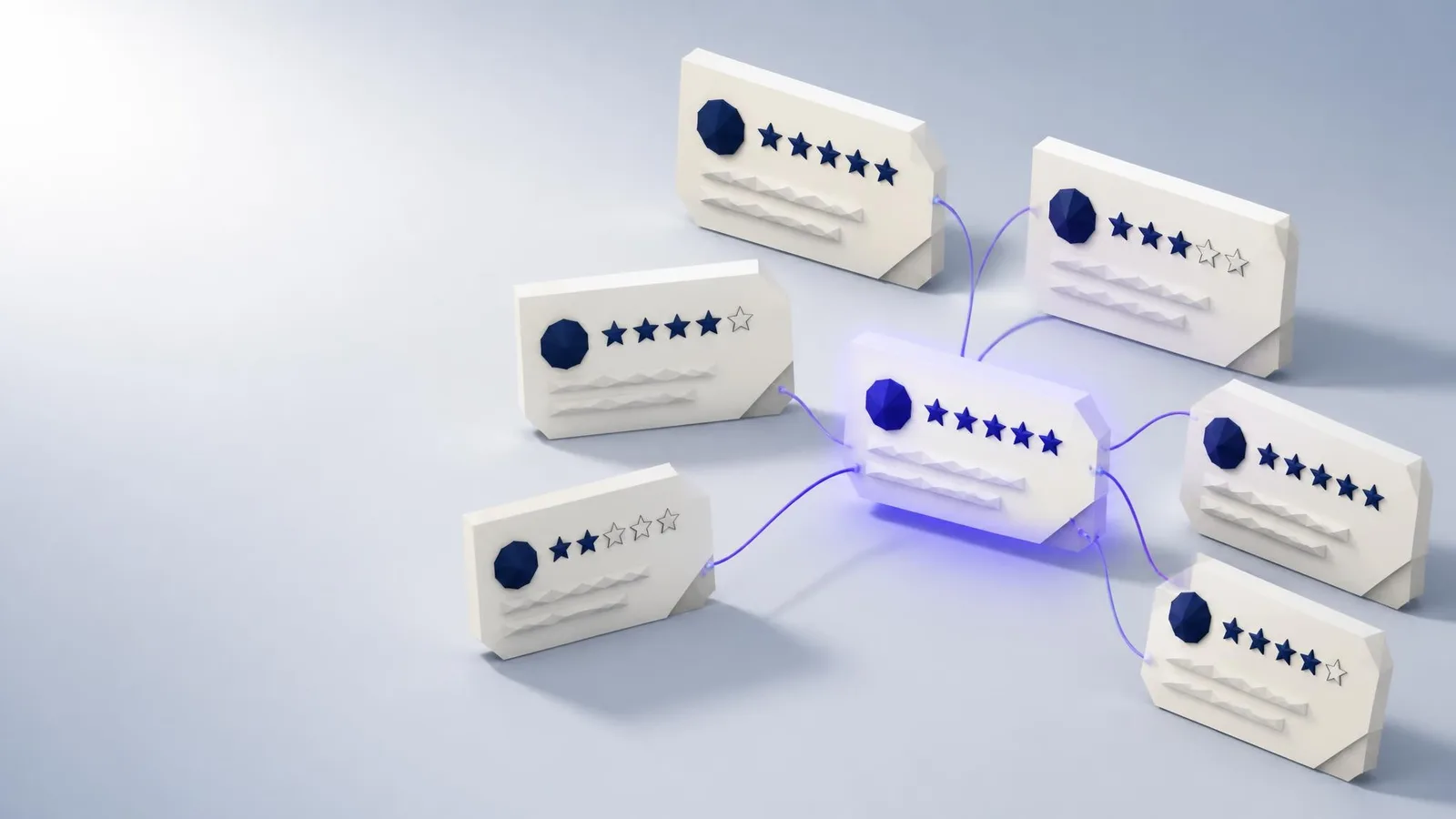
Review pages on G2 and Capterra contain verbatim descriptions of problems, desired outcomes, and unmet needs. Using customer reviews for content ideas means reading the 3-star reviews first. Those reviews describe what a product does solve and what it doesn’t, in language a content writer would never invent on their own.
I look for recurring phrases across multiple reviews. A phrase that shows up in 10 separate reviews is a topic a lot of people care about and have already articulated. Those phrases become headline language, FAQ answers, and article angles that immediately resonate because a real person said it first.
Where it misleads: Reviews reflect the language of existing customers who’ve already found and purchased a solution. Prospects earlier in the buying journey may use different vocabulary and carry different questions. Review mining complements direct customer conversations; it doesn’t replace them.
Source 4: Google Autocomplete and People Also Ask
Google’s autocomplete and People Also Ask features pull from aggregated search data and surface the phrasing patterns actual searchers use around a core topic. The technique is simple: type a seed phrase into Google without pressing enter and record every autocomplete suggestion. Those are the exact strings real people search in high enough volume to trigger a prediction.
People Also Ask boxes are especially useful for understanding how a question branches into related sub-questions. That branching maps directly to article structure and FAQ content. I’ll often use a single People Also Ask chain to outline an entire post, because the questions reveal how a searcher’s thinking progresses from general curiosity to specific decision criteria.
Where it misleads: Autocomplete reflects volume and recency. A suggestion appearing there tells you people search for it. It tells you nothing about whether those people are close to buying. The intent filter still has to come from you.
Source 5: Keyword Research Tools
Keyword research tools provide search volume estimates and keyword difficulty scores for content planning, and those metrics are useful for directional comparison. If I’m choosing between 2 equally relevant topics, the volume estimate helps me pick the one with more demand. That’s a legitimate use.
The numbers are modeled approximations, though. A topic with a 10x higher volume estimate in the tool isn’t necessarily 10 times more valuable to a founder-led business. Paid tools also tend to surface informational queries more prominently than commercial or purchase-adjacent ones, which can steer content planning toward educational articles that attract readers who never convert.
Where it misleads: Treating keyword tool volume as gospel leads to writing for the wrong audience. The tool tells you how many people searched for a string. It doesn’t tell you whether any of them were your potential customers. Keyword research for content planning works best as a sequencing and comparison tool, layered on top of topic ideas you’ve already sourced from higher-fidelity channels.

Source 6: Sales Calls and Support Conversations
Sales call notes and support transcripts contain the raw vocabulary customers use when describing their problems before they’ve learned any vendor’s preferred terminology. That pre-vendor language is irreplaceable for content planning because it’s the same language those people type into Google before they’ve found you.
The questions a prospect asks in the first sales call are almost always topics worth writing about. If 1 person asked it live, others are typing a version of it into a search bar. For founder-led businesses without a content team, this data sits closer than they realize. Founders take the calls, answer the emails, handle the onboarding. Even a note in a shared doc after each sales conversation builds a topic library faster than any keyword tool.
Where it misleads: This source is slow to accumulate and reflects only the customers who reached the sales stage. It misses the much larger population of people who searched, read, compared, and left without ever getting in touch. Pair it with the broader signals from Search Console and community forums to fill that gap.
Source 7: Competitor Content Gap Analysis
Competitor content gap analysis compares a competitor’s ranking pages against the content already published on your site to surface topics you haven’t covered yet. Finding content gaps your competitors miss starts with selecting a competitor whose audience genuinely overlaps with yours. If their ICP is different, their top-performing topics may be irrelevant to your readers.
I actually find this method more useful for spotting topics to avoid than topics to prioritize. If a competitor ranks for a keyword but their content is thin or outdated, there may be a real gap worth filling. If they rank with a thorough, well-structured piece, the effort required to compete might be better spent on a topic only your audience cares about.
Where it misleads: The method assumes your audience is identical to your competitor’s, which is rarely true for B2B businesses with a specific ICP. The content topics your customers actually want may be a distinct subset that competitor content never addresses. Use gap analysis as a complement to primary research, with that caveat front of mind.
Turning a Topic List into a Publishable Priority Order
Once topics are gathered from multiple sources, I apply a 2-part filter before committing to writing anything. First: is the searcher behind this query close to making a decision? Second: can the business credibly answer this question better than what already ranks? Topics that pass both filters go to the top of the calendar.
Keyword research for content planning works best at this stage, as a sequencing tool. Volume estimates help compare 2 equally relevant topics so you write the higher-demand one first. A single month’s content calendar for a lean marketing team needs 2 to 4 well-researched, high-intent posts. That tight focus produces more revenue-relevant traffic than 10 topics chosen for volume alone.
The final step is turning a confirmed topic into a structured brief and then into a published article. That’s the gap between research and results, and it’s where how cpywrk turns topics into published content picks up.

Frequently Asked Questions
How do I prioritize content topics when I have a long list?
Apply a 2-part filter: intent first (is this searcher close to a decision?), then coverage (can I answer this better than what already ranks?). Topics that pass both filters go to the top of the list. Everything else gets parked, not deleted, for a future month when you’ve covered the high-intent topics.
What are high-intent keywords for small businesses and how do I spot them?
High-intent keywords carry the language of decision-making: comparisons, “best for” queries, pricing questions, and problem-specific phrasing. They tend to have lower volume than broad informational queries but attract readers who are closer to buying. I look for phrases that describe an evaluation or a choice, not a definition.
What does search intent in content marketing actually mean in practice?
Search intent describes what the searcher is trying to accomplish. Informational intent means they’re learning. Commercial intent means they’re evaluating options. Transactional intent means they’re ready to act. Writing for the wrong intent produces traffic from people who won’t convert, which is why filtering for intent matters more than filtering for volume.
Is writing about what competitors write about a good strategy?
Only if their audience is genuinely the same as yours. Competitor gap analysis surfaces topics worth considering, but it can’t confirm those topics will resonate with your specific readers. I treat competitor content as a signal to investigate, not a signal to copy.
How many topics should I plan for each month?
For a lean marketing team, 2 to 4 well-researched, high-intent posts outperform a higher volume of thin, low-intent content. The constraint should be quality of the topic selection, not quantity of the output.
Conclusion
Deciding what to write about next month starts with where your customers already are, in their search queries, their forum questions, their 3-star reviews, their first sales call. How to find blog topics that get traffic comes down to matching each research source to the type of insight you need, then applying an intent filter before you commit to writing.
These 7 sources give you a method that works without a dedicated research budget or a content team. The next step is turning a confirmed topic into a published article. Start free trial to see how cpywrk handles that part, or browse more practical content guides if you want to keep sharpening the research side first.
cpywrk
Every article here was made by cpywrk itself: researched, drafted, and run through the same quality and GEO checks the product applies to customer content, then read and approved by a person before it publishes. The blog is the proof.
Related reading
When to Use AI for Content: 7 Jobs to Delegate, 3 to Keep
Discover which content tasks AI handles reliably and which three you must keep yourself, based on where AI is confidently wrong about real-world facts.
7 min read
8 Ways to Keep Your Brand Voice in AI Copywriting
AI drafts default to generic. Here are 8 interventions, from prompt setup to post-draft editing, that keep your brand voice in AI copywriting intact.
6 min read
6 Checks to Run Before Publishing Anything a Machine Drafted
Run these 6 checks before publishing AI content to catch hallucinations, brand voice drift, broken links, and the errors fluency alone won't reveal.
7 min read