6 Content Ideas You Can Pull From a Single Customer Call
A single customer call contains six usable content pieces. This article names the signals to listen for and the capture workflow to extract all six.
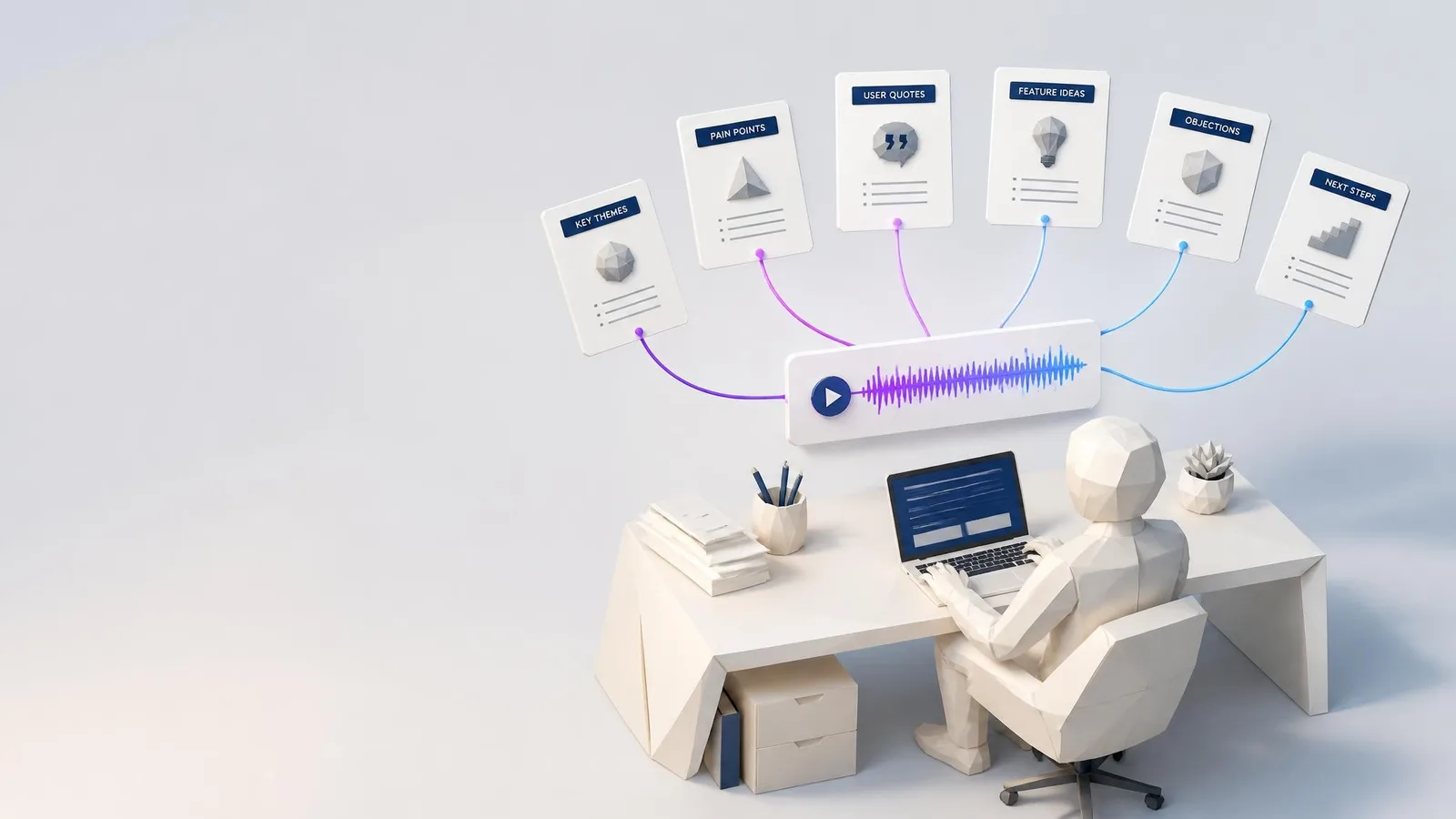
In the 1994 documentary Hoop Dreams, filmmakers followed two Chicago teenagers for five years. They had hundreds of hours of raw footage before they realized the story was already there, captured in real conversations, unscripted moments, and the words people used when they forgot the camera was rolling. The film came together in the editing room, long after the cameras stopped rolling.
I think about that every time I finish a customer call and close my notebook. The content ideas from customer calls are already sitting in the recording. One conversation, mined with intention, reliably produces 6 distinct content pieces: a blog post, an FAQ entry, a social media post, a nurture email angle, a testimonial pull-quote, and a keyword brief for future content.
A single recorded customer call contains the raw material for 6 ready-to-publish content pieces. This article names each one, explains what to listen for during the call to find them, and gives you a capture workflow you can start using on your next call.
The problem is simple. Founders and lean marketing teams do these calls constantly, but the insights evaporate the moment the call ends. Repurposing customer call recordings is the most overlooked content source available to a small business, and it requires zero brainstorming.
Here’s what I cover: the 5 signal types to listen for, the 6 pieces you’ll extract, and a lightweight workflow to capture all of it.
What to Listen for While the Call Is Happening
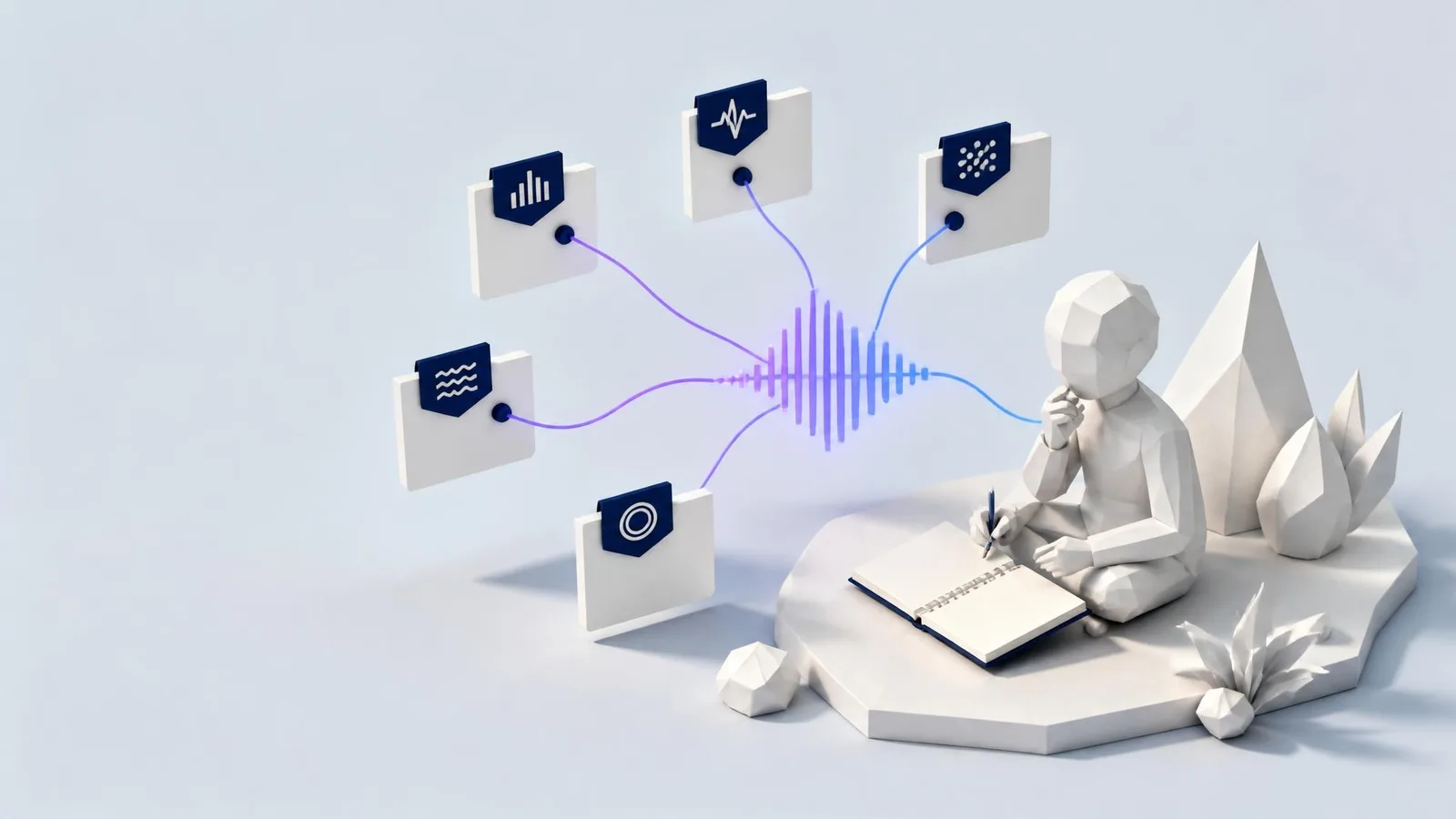
Treating a customer call as a real-time content curation exercise is a skill, and it starts with knowing which moments matter. I keep a notes doc open during every call and flag 5 specific signal types:
-
Exact customer language. The precise words a customer uses to describe their problem are the same words they’ll type into a search engine. I write them down verbatim, spelling quirks and all. These phrases become headlines, subheadings, and search terms I’d never generate sitting at my desk.
-
Repeated questions. Any question a customer asks that I’ve heard before is a FAQ entry waiting to be written. The repetition is the signal. If 3 customers ask the same thing in different words, that question deserves its own page.
-
Objections. A hesitation or pushback (“but what about…”, “the problem I’ve had is…”) is the seed of a nurture email or a landing page section that addresses that exact friction point. Objections tell you where trust breaks down.
-
Analogies and comparisons. When a customer reaches for a metaphor to describe their situation, that framing often becomes the most persuasive headline I’ll write. They invented it themselves, and that’s why it resonates.
-
Before-and-after moments. Any sentence where the customer describes what life was like before they found a solution, and what changed, is the structure of a testimonial or a case study opener. These transitions carry emotional weight that polished marketing copy rarely matches.
The habit takes about 3 calls to build. After that, flagging these moments becomes automatic.
Creating Multiple Content Pieces From One Call
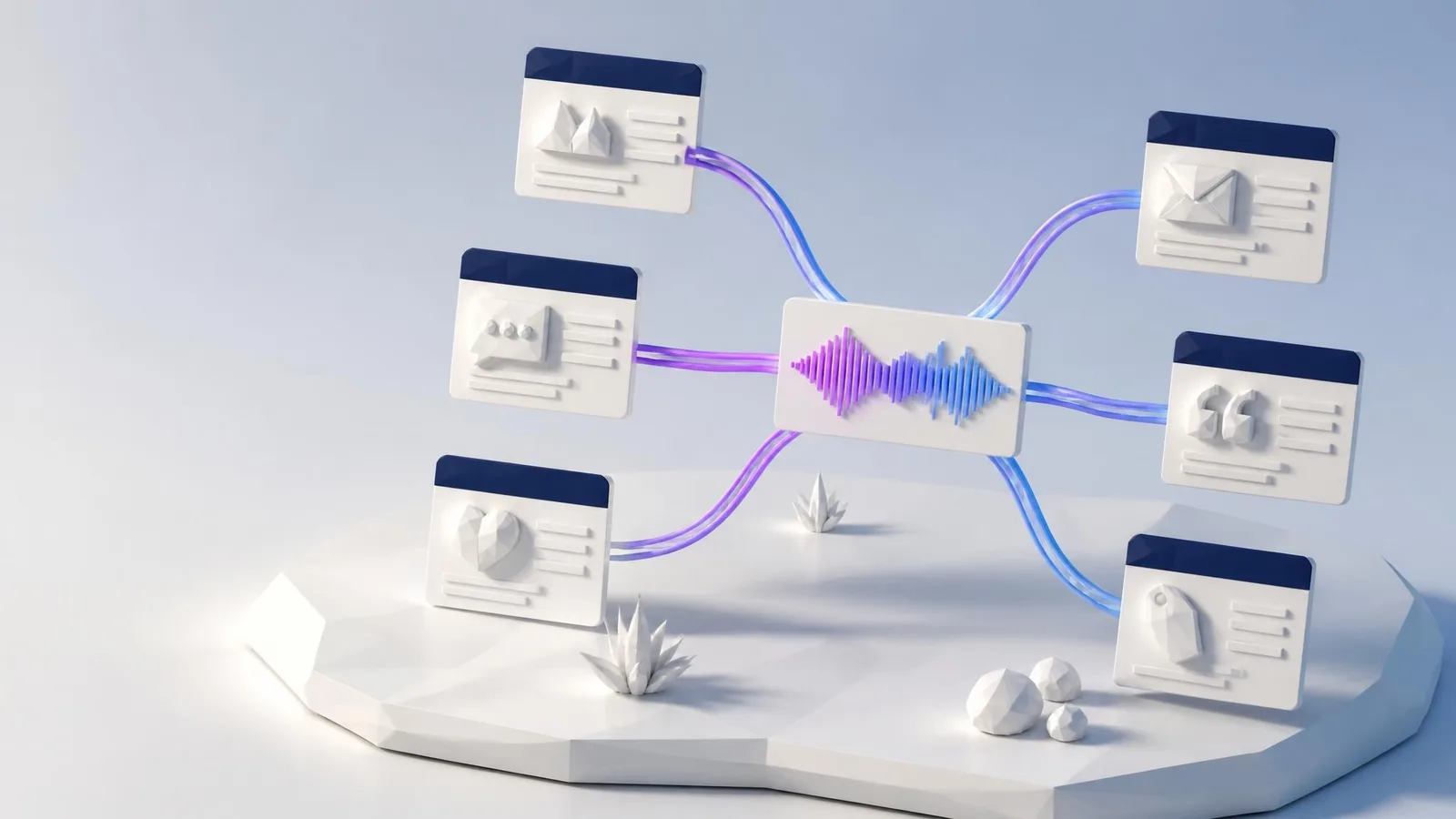
Here’s the content framework built around customer calls. Each of the 6 pieces maps directly to the signal types above.
-
Blog post. The problem the customer raised, stated in their own words, becomes the article brief. I frame the H1 around their problem statement and write the post that answers it. For founder-led businesses and lean marketing teams working without a content team, this is how to turn a customer interview into blog content without staring at a blank page. The customer already wrote your opening line.
-
FAQ entry. The question the customer asked that I’ve heard before goes straight into my FAQ page. I use their phrasing as the question heading, rough edges included. A polished, corporate-sounding question gets fewer clicks than one that sounds like a real person typed it.
-
Social media post. A verbatim or lightly adapted customer phrase, their analogy or their before-and-after moment, is a LinkedIn or Instagram post. The rough language is the point. It reads like a real person because it is one.
-
Email or nurture sequence angle. The objection the customer raised becomes the subject line and premise of a nurture email. “I wasn’t sure it would work for a team our size” is a better email opener than anything I’d invent from scratch. The objection carries the reader’s own doubt back to them, which is what makes them keep reading.
-
Testimonial or social proof pull-quote. The before-and-after moment, with the customer’s permission, becomes a quote block on a landing page or a case study intro. I ask for permission to use it at the end of the call, while the context is fresh.
-
Keyword or topic brief. The language pattern across the call, the terms they used, the questions they asked, informs a keyword brief for future content. A voice-of-customer content strategy compounds over time. Each call adds to a map of what buyers actually search for, giving you content that ranks and content that converts because it mirrors real buyer language. For lean marketing teams, this map replaces the brainstorming session entirely.
Six pieces. One call. No content team required.
A Simple Capture Workflow
Knowing what to listen for is half of it. The other half is a process simple enough that I actually follow it. Here’s what I do, and it takes less than 20 minutes after each call.
-
Before the call: inform the participant you’ll be recording and confirm their consent. Consent laws vary by state and country, so tell them at the start of every call regardless of where your customer is based.
-
During the call: keep a simple text file open. When you hear one of the 5 signal types, drop a single-word tag next to the timestamp: “blog,” “faq,” “email,” “quote,” “keyword.” You are flagging moments, and the transcription comes later.
-
After the call: run the recording through a transcription tool. Review the flagged timestamps, pull the relevant passages, and drop them into a single document organized by the 6 content types. That document is your content brief for the week.
-
Before publishing: adapt each raw passage to fit your brand voice. The customer’s language is the starting point. An internal guide on brand voice guidelines for small teams helps standardize how that adaptation happens across everything you publish, so your brand-aligned content sounds consistent whether it started as a call transcript or a shower thought.

The whole system fits in a notes app, a transcription tool, and a single shared document. No CRM required.
Frequently Asked Questions
Is it legal to record customer calls for marketing?
The requirement is straightforward: tell participants the call is being recorded and confirm they’re OK with that before you start. Consent laws vary by state and country, so apply this as a default regardless of where your customer is based. This isn’t legal advice, and specific industries may have additional rules, but informed consent at the start of every call covers the baseline.
What should I listen for on a customer call when I’m mining it for content?
Five signal types:
- Exact customer language: the words they use to describe their problem
- Repeated questions: anything you’ve heard from more than one customer
- Objections: hesitations, pushback, or “but what about” moments
- Analogies: metaphors or comparisons the customer invents to explain their situation
- Before-and-after moments: descriptions of what changed after they found a solution
These 5 signals map directly to the 6 content pieces the article covers. Recognizing them becomes a habit after a few calls.
Can a customer call replace a content brainstorming session?
In my experience, a well-mined call often produces more usable raw material than a brainstorming session, because it reflects what buyers actually say and search for. A founder content strategy built from customer conversations compounds over time: each call adds to a map of real buyer language that no internal brainstorm can replicate. The brainstorm generates guesses. The call generates evidence.
Conclusion
- Start your next call with a tag sheet open. The 5 signal types are your checklist. If you flag even 2 of them, you’ll walk away with enough raw material for 3 or 4 publishable pieces.
- Prioritize the keyword brief (Piece 6) over the others. The first 5 pieces produce immediate content. The keyword brief builds a compounding map of how your buyers actually talk, which shapes every piece of content you create after it.
- Batch your publishing and mine every call. Capture raw material from every call as it happens; schedule writing and adapting for a single block each week. Maximizing content output from customer calls is a capture habit. The writing happens in a weekly batch.
When you’re ready to turn those captured insights into published, brand-aligned content without hiring writers or managing an agency: Start free trial.
cpywrk
Every article here was made by cpywrk itself: researched, drafted, and run through the same quality and GEO checks the product applies to customer content, then read and approved by a person before it publishes. The blog is the proof.
Related reading
When to Use AI for Content: 7 Jobs to Delegate, 3 to Keep
Discover which content tasks AI handles reliably and which three you must keep yourself, based on where AI is confidently wrong about real-world facts.
7 min read
8 Ways to Keep Your Brand Voice in AI Copywriting
AI drafts default to generic. Here are 8 interventions, from prompt setup to post-draft editing, that keep your brand voice in AI copywriting intact.
6 min read
6 Checks to Run Before Publishing Anything a Machine Drafted
Run these 6 checks before publishing AI content to catch hallucinations, brand voice drift, broken links, and the errors fluency alone won't reveal.
7 min read