5 Best Ways to End Blog Posts That Lead Somewhere
Discover the best ways to end blog posts so readers take a next step. 5 real, written-out endings that drive action without a hard sell. (157 characters)

In the final episode of The Sopranos, the screen cuts to black mid-scene. No resolution, no summary, no tidy wrap-up. David Chase understood something most writers forget: the ending is where you either leave the audience with something that lingers, or you let them walk away unchanged.
I think about that cut to black every time I read a blog post that ends with “In summary, we’ve covered…” The reader already covered it. They were there. And now they’re gone, because the ending gave them permission to leave. If you’re wondering why readers don’t take action after reading a blog post, the answer is usually in the last paragraph.
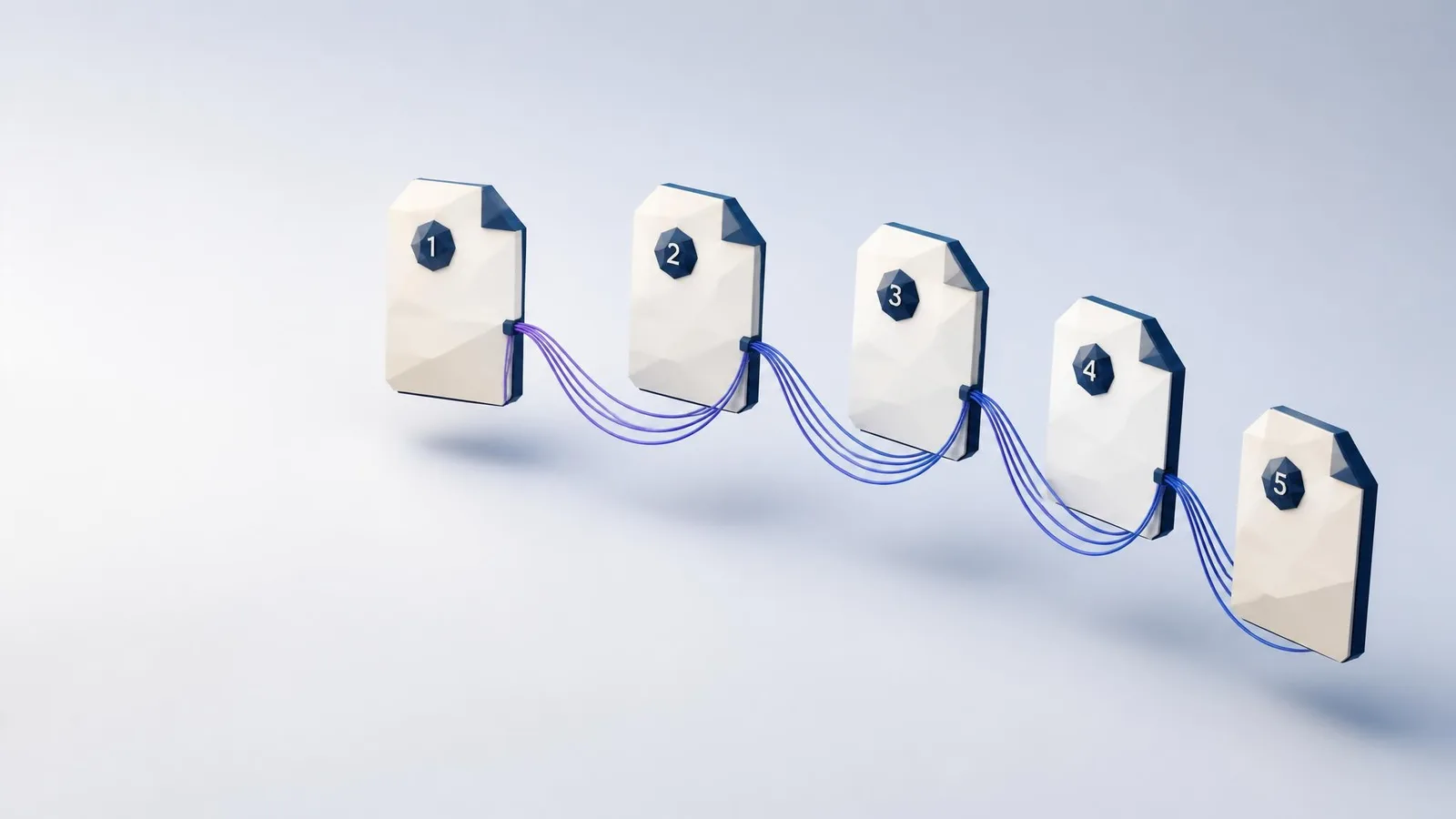
The best ways to end blog posts give readers a specific place to go next. There are 5 endings that do this well: the direct next step, the tension question, the internal bridge, the insight extension, and the soft CTA. Each one moves the reader forward instead of replaying what they already read, and I’ve written all 5 out in full below.
What matters here is engagement quality over traffic numbers. Readers who reach the end of your article are the highest-intent people in your audience. They read every word. They’re ready to do something. The question is whether your ending gives them something to do, and the blog ending examples that follow are designed to answer that. This is about how to end an article effectively, with a real ending that earns the reader’s next click.
The Summary Paragraph Is the Weakest Ending You Can Write
A summary ending tells readers what they just read. It moves backward through the article, replaying points the reader absorbed 30 seconds ago. The reader who made it to the bottom already knows the summary.
That’s the core problem with learning how to end a blog post without summarizing: most writing advice teaches the summary as the default. It feels safe. It feels complete. But completion and momentum are different things, and a summary provides the first while killing the second.
Readers who reach the final paragraph are the most engaged segment of your audience. A recap treats that engagement as though it needs reinforcement. It doesn’t. It needs direction. 1 sentence that gives the reader a surprising implication or a specific action outperforms 3 paragraphs of restatement, because the reader at that moment is looking forward, and the summary is looking back.
The 5 endings that follow all share one trait: they move the reader somewhere. Here’s what’s coming:
- The direct next step
- The tension question
- The internal bridge
- The insight extension
- The soft CTA
Each one is written out in full. Pick the one that fits your next piece.
Ending 1: The Direct Next Step
The direct next step ending names 1 specific action the reader can take immediately, tied to the argument the article just made. Specificity is what removes friction. “Take action today” asks the reader to figure out what action means. “Open your last published article and rewrite the final paragraph” tells them exactly what to do.
This ending type works best when the article gives the reader a framework, a checklist, or a technique they can apply. The ending converts that learning into a first move. The action has to be small and immediate, something the reader can do in the next 5 minutes.
Here’s what a direct next step ending looks like, written out:
Open your most recent published article in a new tab. Read the last paragraph. If it starts with “In summary” or “To wrap up,” delete it and replace it with a single sentence that names the first thing your reader should do after finishing. Publish the update. That’s the whole move.
The reader who sees that ending has no ambiguity about what comes next. The action is concrete, it’s connected to the article’s argument, and it takes less than 5 minutes. That’s the standard every direct next step ending should meet.
Ending 2: The Tension Question
Ending a blog post with a question is a recognized technique, but most writers get it wrong. The difference between a question that produces engagement and one that produces silence is specificity.
A vague question asks nothing. “What do you think?” gives the reader no angle to respond to and no tension to resolve. It’s the written equivalent of nodding politely at a stranger. The reader nods back, closes the tab, and forgets the article existed.
A tension question forces the reader to apply the article’s argument to their own situation. It surfaces a decision they haven’t made or a contradiction they haven’t resolved. Here’s the contrast:
Weak version:
What are your favorite ways to end a blog post? Let me know in the comments.
Strong version:
You’ve published articles that got traffic and produced nothing. You know the ending is the moment that matters. So why does your most recent post still end with a summary?
The strong version names the reader’s specific situation, connects it to the article’s argument, and creates a tension that can only be resolved by doing something differently. That’s what article endings that drive engagement actually look like: they leave the reader with a question they can’t dismiss.

Ending 3: The Internal Bridge
Using an internal link at the end of a blog post creates forward momentum without any promotional pressure. The internal bridge ending directs the reader to a related piece that extends the argument or answers the natural next question the article raises.
The link has to follow logically from the article’s core argument. A reader who absorbed the piece should feel the linked article is the obvious next read. If the connection requires a leap, the bridge is broken.
The key is to tease what the linked piece adds rather than just naming it. 1 sentence of context does the job. Here’s the full ending:
Every ending in this article assumes something fundamental: the article itself was worth finishing. If your content is attracting readers who skim and bounce before they ever reach the last paragraph, the problem is upstream. I wrote a breakdown of what separates content that earns real engagement from content that just collects pageviews, and it starts there.
The reader gets a clear direction, a reason to click, and a natural transition that extends the conversation rather than ending it.
Ending 4: The Insight Extension
The insight extension ending adds 1 idea the article has been building toward but never stated directly. It’s the logical implication, the surprising consequence, or the reframe that only makes sense after everything that came before it.
This ending works because it gives the reader something to take away that feels earned. A summary repeats what was said. An insight extension rewards the reader for finishing by offering a thought they couldn’t have reached without reading the full piece.
This ending type is best suited to opinion pieces, contrarian arguments, and articles where the main idea has a counterintuitive consequence the body doesn’t spell out. Here’s the full example:
The strange thing about article endings is that the reader already knows whether your content is good by the time they reach one. The ending doesn’t change their opinion of the article. It changes what they do next. And “what they do next” is the only part of content that shows up in your revenue. Everything before the ending is the argument. The ending is the only part that’s a result.
That final observation follows from the article’s logic, but it reframes the entire discussion in a way the body didn’t state directly. The reader leaves with a new way to think about endings, and that sticks.
Ending 5: The Soft CTA
A content call to action at the end of a blog post feels promotional when it’s mismatched to the reader’s intent at that moment. A CTA that follows naturally from the article’s argument feels helpful.
The difference between a jarring CTA and a soft one is relevance. A generic “sign up today” asks the reader to change context. A CTA that names the problem the article just addressed and offers 1 specific next step stays in the reader’s frame. 1 CTA, 1 action. Multiple CTAs at the end of an article increase decision friction.
Here’s a soft CTA ending, written out using a real example:
You’ve read about 5 ways to end an article so it leads somewhere. Now here’s the practical question: who writes the articles that need those endings? If you’re running a lean marketing team or a founder-led business and the bottleneck is getting brand-aligned content published consistently, you can see how cpywrk works and Start free trial.
The CTA follows from the article’s argument. It names the reader’s constraint, connects it to the topic, and offers a single clear action. No pressure, no hype, no “limited time offer.” The reader who’s ready will click. The reader who isn’t will remember the article.

How to Choose the Right Ending for Your Article
The right ending follows from the article’s content goal. Here’s a simple mapping for giving readers a clear next step in articles, matched to what the piece is trying to accomplish:
| Ending Type | Best Suited To | Example Content Goal |
|---|---|---|
| Direct Next Step | How-to articles, frameworks, checklists | Reader applies a technique from the article within 5 minutes |
| Tension Question | Opinion pieces, contrarian arguments | Reader re-examines their own approach and engages |
| Internal Bridge | Topic clusters, series, deep-dive content | Reader moves to the next piece in the content ecosystem |
| Insight Extension | Thought leadership, editorial essays | Reader leaves with a reframe they share or reference |
| Soft CTA | Bottom-of-funnel content, product-adjacent articles | Reader takes a specific conversion action |
The summary ending is absent from this table. It closes a page. These 5 open a door.
The Ending Is the Highest-Intent Moment in Your Article
The reader at the bottom of your article is the one who cared enough to finish. Pick the ending from this piece that fits your next article, and rewrite the last paragraph today.
If you want content that ranks and converts without managing a content team, Start free trial.
cpywrk
Every article here was made by cpywrk itself: researched, drafted, and run through the same quality and GEO checks the product applies to customer content, then read and approved by a person before it publishes. The blog is the proof.
Related reading
8 Ways to Keep Your Brand Voice in AI Copywriting
AI drafts default to generic. Here are 8 interventions, from prompt setup to post-draft editing, that keep your brand voice in AI copywriting intact.
6 min read
6 Checks to Run Before Publishing Anything a Machine Drafted
Run these 6 checks before publishing AI content to catch hallucinations, brand voice drift, broken links, and the errors fluency alone won't reveal.
7 min read
6 Reasons AI Content Reads as Generic, and What Fixes It
AI-generated content that sounds the same as everyone else's is a pre-draft problem, not a model problem. Here are 6 causes and the fixes that actually work.
6 min read